

· 6 min read
Lock-up-and-Leave: Designing a Fethiye Villa That Stands Empty for Months
What happens to the water, damp, electrics, sun and garden when you lock the door and fly home? Design and services decisions for a house in Fethiye that is closed for part of the year.
Architect Okan Çakal
Many owners in Fethiye spend part of the year back in the UK or elsewhere, and the question on their minds is always the same: when I lock up and leave, what happens inside, and what will I find when I come back? Much of the answer depends on how the house was designed and how its services were laid out. From our experience on site, a true lock-up-and-leave home is one designed for three states at once: lived in, closed up, and the first day back. This article is about the house itself: decisions that reduce risk while nobody is there and make life easier for whoever looks in on it for you.
1. Which season will it stand empty?
Priorities depend on the answer. A house closed for the winter faces rain, damp and mould, power cuts in storms and blocked roof drains. A house closed in summer faces sun and heat instead: fading textiles and timber, heat building up in shut rooms, a garden without water, and a rooftop solar water heater overheating because nobody is using hot water. At the start of design we ask which months the house will be closed and order the decisions accordingly.
2. Water: plumbing you can shut off, separate and monitor
In a closed house, the worst damage usually comes from a small leak. The precautions are simple, but they have to be built in:
- The main stopcock should be easy to reach and clearly marked, not behind a cupboard or in a pit full of mud.
- The garden and pool supply should have its own valve, separate from the house. If irrigation is connected after the main stopcock, turning off the water when you leave also cuts off the garden.
- The booster pump (hidrofor, common where homes have a water tank) can keep pumping through a leak until the tank is empty. Put it on its own easily switched circuit, or arrange for a leak alarm to stop the pump as well.
- Leak sensors go under the sink, behind the washing machine, under the water heater and on the plant room floor, and can be linked to an automatic shut-off valve.
- Traps and floor drains dry out in unused bathrooms and let smells in; floor drains with a mechanical odour seal reduce the problem.
On your return, water that has sat in the tank and pipes needs flushing through, so the storage tank should have a drain valve and an easily opened lid.
3. Electrics: deciding in advance what stays on
Some things must keep running while you are away: the fridge, alarm and cameras, router, dehumidifier, leak valve, irrigation controller and pool pump. Sockets, the water heater, the oven and most lighting can go off. Splitting the consumer unit into these two groups, labelling them clearly and gathering the "off" circuits so they can be isolated with a single switch makes closing the house quick and hard to get wrong. Motorised shutters need a manual override for power cuts. And ask the supplier how a solar water heater is protected against overheating when it stands unused for months.
4. Damp: the quiet problem of a closed house
In a Fethiye winter, a shut house gets no fresh air, humidity rises and mould starts where you cannot see it: behind cupboards, inside wardrobes, in bathroom grout. In the design we plan:
- An air gap behind cupboards on external walls, with ventilation slots above and below the doors.
- Bathroom extractor fans with humidity sensors, on a circuit that stays on.
- Secure trickle vents, so rooms can breathe without leaving windows on the latch.
- A dehumidifier with its condensate hose running straight to a drain; a unit that stops when its bucket is full is little use over a long absence.
The air conditioning's dehumidify mode and ventilation options are covered in our article on heating, cooling and ventilation.
In an empty house it is not the water that makes the damage big, but the time that passes unnoticed.
5. The envelope: against rain, sun and break-ins
External roller shutters protect glass from storms and sun and make a closed house more secure; the insulation of the shutter box and how it sits in the façade are worked out in the drawings. Wide sliding doors are often the weak point and need extra locks and a solid frame detail. On flat roofs and terraces, water must have somewhere else to go if one drain blocks: a second outlet or an overflow, leaf guards and enough downpipe capacity. The checks to make before the rains are in our article on waterproofing roofs and terraces before winter.
6. Garden and pool
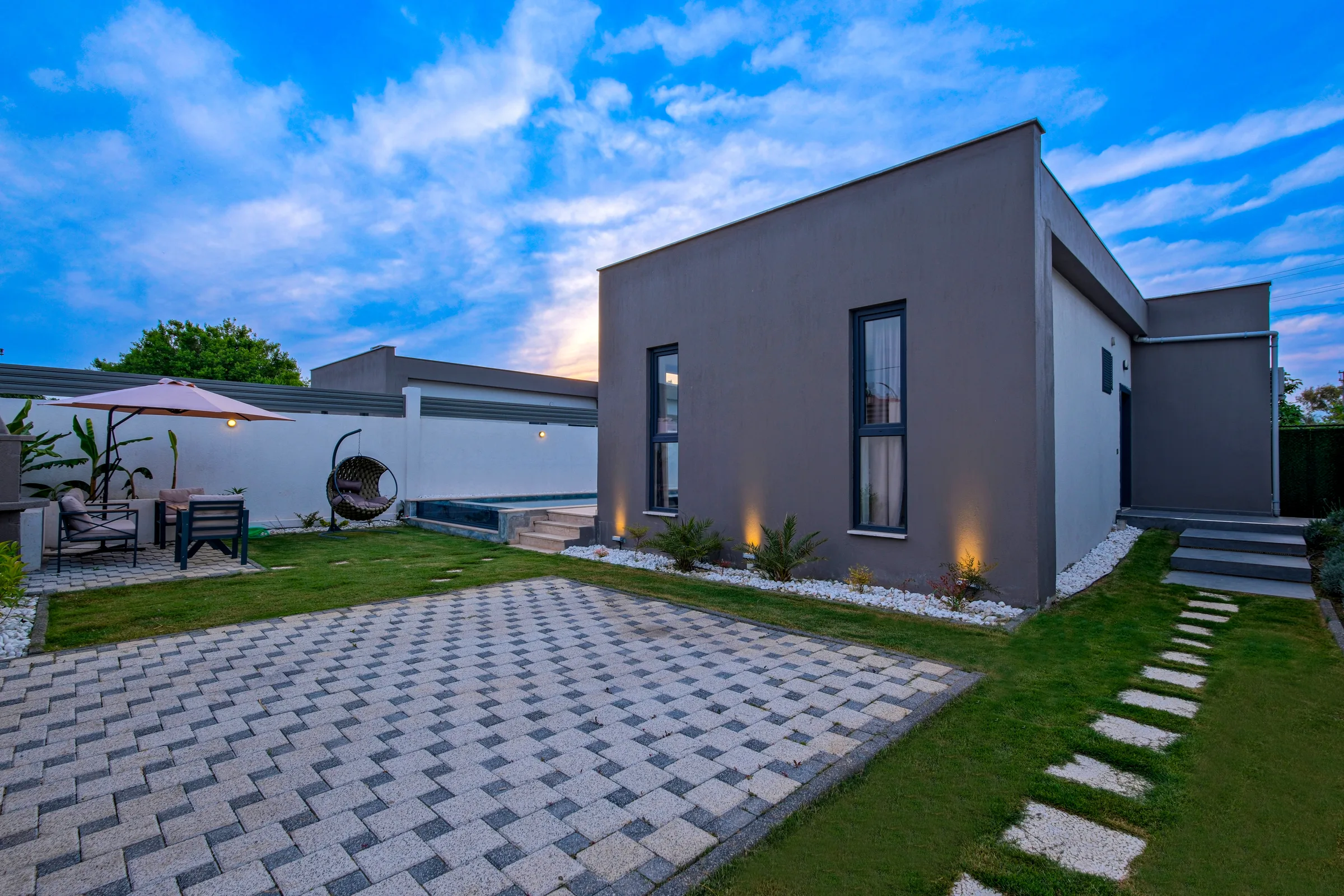
A garden survives without its owner through automatic irrigation, a rain sensor and plants that need little water; planting is covered in our villa garden design article. A lockable outdoor store for cushions and garden furniture saves carrying everything indoors each time you leave. For the pool, a winter cover or timed circulation is considered. Draining it is not automatically the safe option: on plots with high groundwater an empty pool shell can be pushed upwards, so decide with the pool builder and a qualified engineer. A floor drain in the pool plant room keeps a failed seal from flooding it.
7. Wardrobes, textiles and a closing-up list
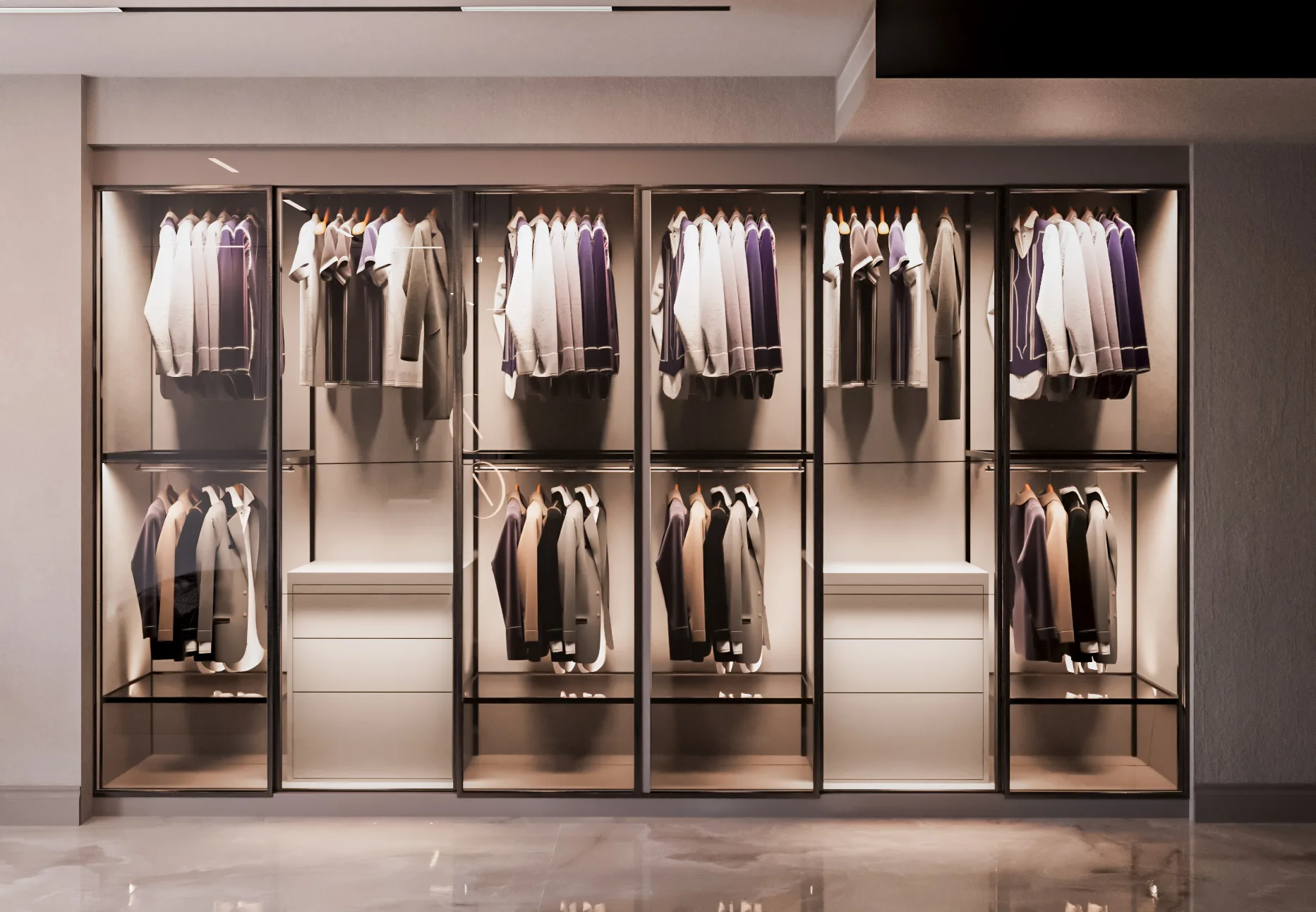
Bedding, towels and winter textiles keep well in ventilated wardrobes, in breathable covers; textiles packed damp into sealed boxes come out smelling musty. Rugs can be rolled and stored off the floor. If you want a safe, the wall or floor it will be fixed to is decided in the drawings.
Finally, the house should come with a short closing-up and opening list: which valves to shut, which switches to turn off, what stays on, what to check on return. Together with a labelled consumer unit and a drawing showing the valves, it also makes things easier for the neighbour or friend who checks on the house for you.
How we plan a villa that will be closed for part of the year is explained on our villa construction in Fethiye page.
Frequently asked questions
Can I just leave the air conditioning on dehumidify all winter?
It helps, but on its own it will not deal with damp inside closed wardrobes, bathrooms or a ground floor. A dehumidifier draining to a waste pipe, ventilated cupboards and bathroom extractors work together.
Should I drain the pool while I am away?
Not necessarily. On plots with high groundwater an empty pool can lift, and the finish can suffer. A winter cover or timed circulation is often considered instead; decide with the pool builder and a qualified engineer.
Can these measures be added to a villa I already own?
Most can: leak sensors, an automatic valve, a drain connection for the dehumidifier, shutters. Separating circuits needs changes to the consumer unit and wiring, which is easiest during a renovation.
If you are planning a house you will lock up for part of the year, get in touch and we will work through the decisions around the way you will use it.
- yazlık ev
- villa tasarımı
- kapalı ev
- nem
- Fethiye