

· 5 min read
Air Conditioning, Heating and Ventilation for a Villa in Fethiye
AC, heating and ventilation are not appliances to add after the build; they are part of the design. How we plan them together for villas in Fethiye.
Architect Okan Çakal
Walk around Ovacık or Çalış and you will see it on many houses: copper pipes running across a freshly painted wall, a row of outdoor units on the façade, a split unit blowing straight at the bed. All of these come from one thing, air conditioning planned after the walls were finished. From our experience on site, cooling, heating and ventilation need to be decided as early as the structural and electrical design. Here is how we plan them for a villa in Fethiye.
1. Passive first, then active
The house itself sets the load on the machines. With good orientation, overhangs, shading, glazing and insulation, smaller equipment delivers more comfort. We covered those passive measures in our article on designing a cool house; this one is about the mechanical systems that sit on top. Equipment is sized by the mechanical engineer from the house's actual heat gains and losses, not by rule of thumb.
2. Air conditioning options
- Wall-mounted splits: one unit per room. Simple, but each indoor unit needs its own pipe run and often its own outdoor unit.
- Multi-split: several indoor units on one outdoor unit, so fewer boxes on the façade.
- Ducted (concealed) units: the unit sits in a dropped ceiling and air comes through slim grilles. Visually calm, but ceiling depth, access hatches and duct routes must be designed from the start.
- VRF systems: for larger villas, all indoor units on one variable refrigerant flow system; they need proper design and servicing.
The right choice depends on the size of the house, the number of floors, how you use it and the ceiling decisions in the interior design.
3. Where do the outdoor units go?
This is one of the most neglected decisions. The units need to be out of sight but with free airflow and safe service access: on the roof, in a screened technical niche, or behind a slatted screen in the garden. We check:
- No noise towards bedroom windows, neighbours or the pool terrace
- No hot air recirculating in a cramped niche, which cuts efficiency
- Coastal-grade coated units and stainless fixings for sea air
- Condensate piped to a drain, not dripping down the façade
Retrofitted AC cools the house but spoils the façade; AC drawn into the design protects both.
4. Heating for a mild but damp winter
Fethiye winters are mild, but on wet days a house feels cold and clammy inside. Options depend on how you use the house:
- Heating with the AC: the same system works in winter; practical for houses used for short stays.
- Heat pump with underfloor heating: even warmth across the floor, comfortable in homes lived in all year. The floor finish and screed depth are decided with it.
- Towel radiators and underfloor heating in bathrooms: so bathrooms dry out in humid weather.
- Fireplace or stove: for atmosphere; flue, air supply and safety details belong in the design.
Planning heating together with hot water also simplifies the plant room and pipe routes.
5. Ventilation and humidity
In a house closed for the winter while you are abroad, the real enemy is usually damp rather than cold: mould behind wardrobes, bathroom grout that never dries, a stale smell on arrival. So we plan:
- Bathroom and WC extract fans ducted directly outside
- A kitchen hood that extracts outdoors, with a matching air inlet
- Where needed, mechanical ventilation with heat recovery, which keeps air moving while the house is empty
- Dehumidification options in basements and laundry areas
6. Room by room, and maintenance
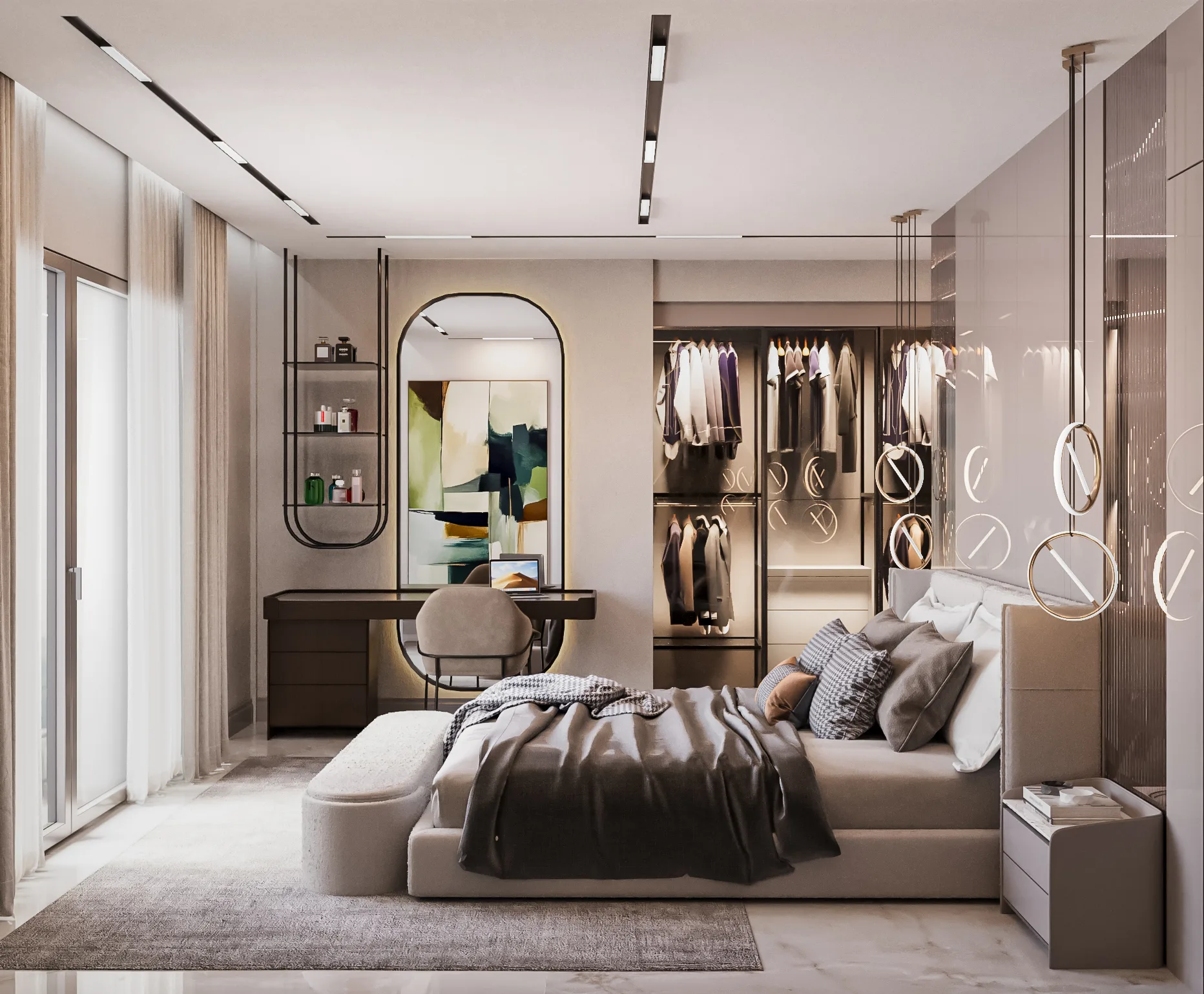
Indoor units are placed with the interior design: never blowing at the bed, and in living rooms reaching the large glazing that heats up in the sun. We discuss AC position in bedrooms in our article on bedroom and wardrobe design.
For a holiday let, zoning and simple controls matter. A guest floor can be controlled separately, and window contacts that stop the unit when a door is left open cut wasted energy. Filter cleaning and service access are designed in: hatches in ceilings, safe working space at outdoor units. If you are abroad for long periods, ask for a written maintenance schedule so a local service company can keep the systems ready for the season.
How we coordinate mechanical, structural and electrical design together is described on our construction in Fethiye page.
Frequently asked questions
When should AC pipework go in during construction?
Pipes and condensate drains go in with the first-fix services, before plaster and screed. The units themselves are fitted after finishes, so indoor unit positions must be fixed at design stage.
Do I need underfloor heating in Fethiye?
It is not essential; it depends on use. It adds comfort in a home lived in all year, while for a summer house heating with the AC is often enough.
How do I prevent damp while the villa is closed?
Well-planned extract ducts, mechanical ventilation or dehumidification where needed, and keeping wardrobes away from external walls all reduce the risk.
To plan your villa's climate systems together with the design, get in touch and we will look at the options for your layout and the way you use the house.
- villa iklimlendirme
- klima tesisatı
- yerden ısıtma
- mekanik havalandırma
- Fethiye inşaat