

· 6 min read
Keeping a house cool in Fethiye: shade, glazing and natural ventilation
How to design or adapt a home in Fethiye so it stays cooler through the hot, humid summer without relying on air conditioning all day.
Architect Okan Çakal
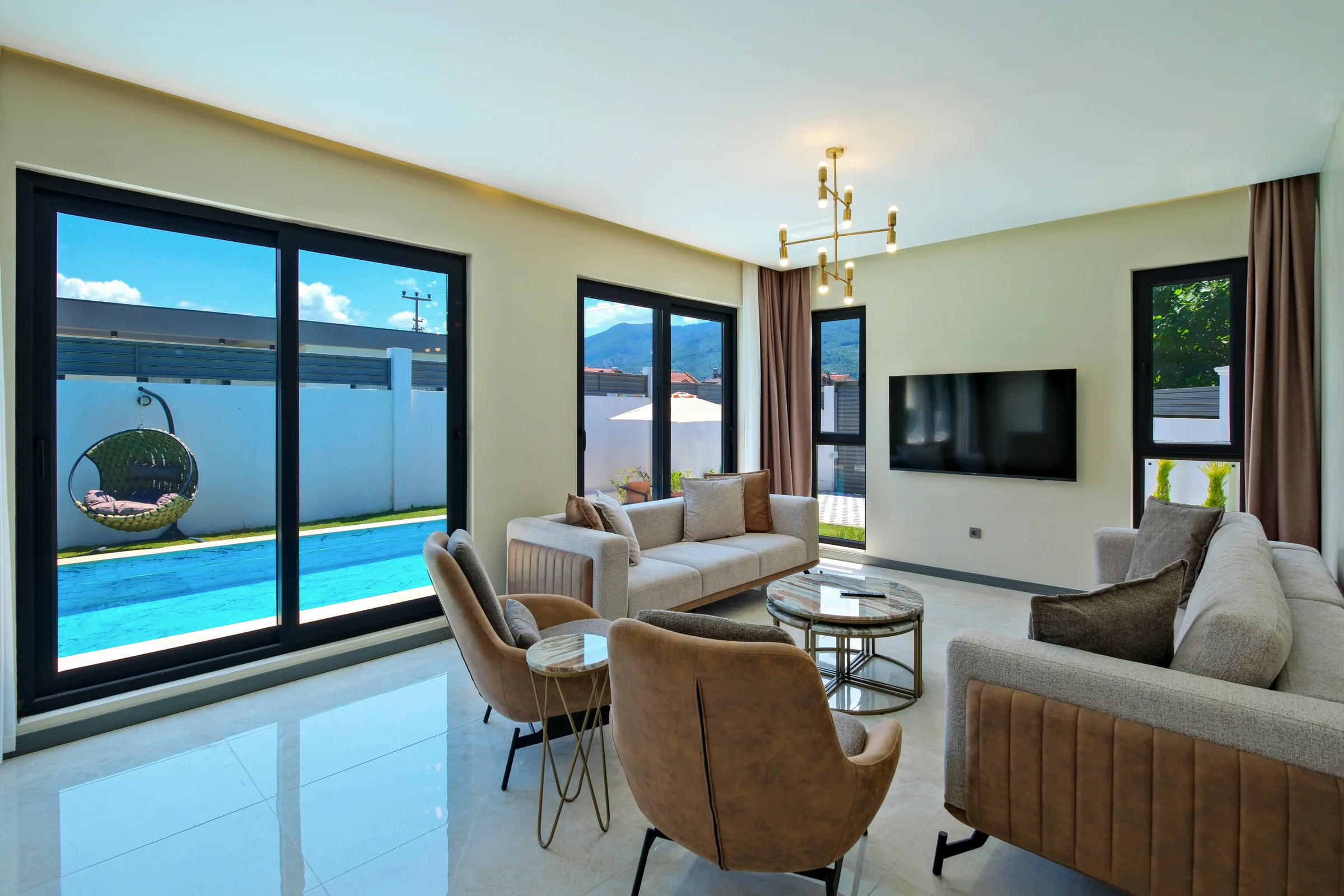
If you have spent a July afternoon in a villa in Çalış or Ovacık, you know the feeling: the view through the big glass doors is wonderful, and the living room behind them is an oven. Many homes in the area were designed for the view first and the climate second, and the air conditioning has to make up the difference. From our experience on site, a cool house is decided long before anyone chooses an AC unit. Here is what makes the difference, whether you are building from scratch or improving a house you already own.
1. Orientation: how the house sits in the sun
The cheapest cooling decision is where the house faces. A south-facing facade is easy to shade in summer, because the sun is high and a simple overhang blocks it. The west is the hard side: the afternoon sun comes in low and direct, straight under any overhang, at exactly the hottest time of day.
When we plan a house on a plot, we try to:
- Put the main living spaces towards the south and east, and storage, stairs and bathrooms on the west
- Protect west-facing glass with a deep terrace or vertical shading rather than giving up the view
- Keep bedrooms away from the facades that heat up through the afternoon
- Read the prevailing wind and the afternoon sea breeze before the layout is fixed
Most plots with a view around Fethiye are sloped, and the view often points west over the bay. When orientation and view pull in different directions, the answer is usually in the shading.
2. Overhangs, pergolas and shutters
Stopping the sun before it reaches the glass is far more effective than cooling the room afterwards. The tools we rely on:
- Overhangs and cantilevered slabs: block the high summer sun on the south side, while letting the low winter sun in
- Pergolas: shade the terrace; planted with a deciduous climber, they give shade in summer and let the sun through in winter
- External shutters: the traditional answer to low east and west sun, and very practical when the house is empty for weeks; opened at night, they help with ventilation too
- Vertical fins or louvres: cut the sun coming from the side without closing off the view
Curtains and blinds inside block the light but leave most of the heat in the room. Shading belongs on the outside of the glass.
Stop the sun outside the glass; heat that gets in is always harder to get out.
3. Choosing the glazing
Double glazing with good thermal performance is the normal standard today. On top of that, solar control glass lets most of the daylight through while reflecting part of the sun's heat. The balance to watch: glass that is too dark or too reflective makes rooms gloomy and turns the facade into a mirror.
We suggest choosing glass facade by facade. Large west-facing doors benefit most from solar control; shaded facades can use clearer glass that favours daylight and views. The quality of the window frames and how carefully they are installed matter as much as the glass itself.
4. Insulation and thermal mass
Insulation is usually discussed as a winter topic, but in summer it does the same job in reverse: it keeps the heat outside. In Fethiye the roof takes the most sun, so roof insulation (or insulation of the top floor slab) should never be cut from the budget. External wall insulation, known locally as mantolama, protects the walls and structure from the sun.
Thermal mass, meaning heavy walls and floors that absorb and release heat slowly, helps when it is used correctly: the house warms up slowly during the day, and the stored heat is flushed out at night with the windows open. The mass must be shaded and the house must be ventilated at night; otherwise the stored heat simply keeps the bedrooms warm until morning.
5. Cross ventilation and the stack effect
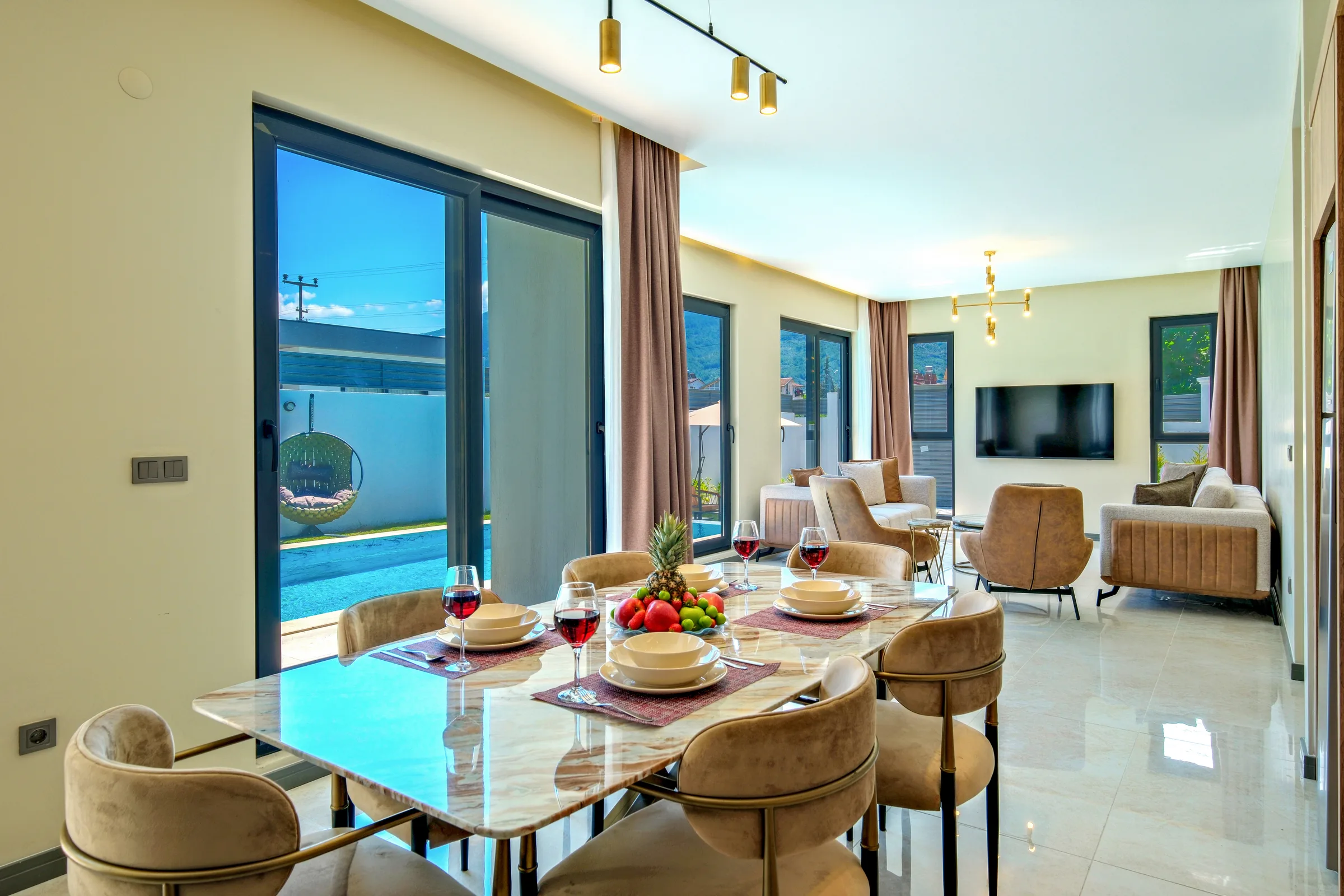
There are two basic ways to move air through a house without a fan:
- Cross ventilation: opening windows on opposite facades lets air flow straight through. A deep, heavily divided plan blocks this, so the position of internal doors and walls matters as much as the windows.
- Stack effect: warm air rises. An opening window or roof light at the top of a stairwell or a double-height space lets hot air escape upwards, pulling cooler air in through lower windows.
Flushing the house in the evening and overnight means the next day starts cooler. Ceiling fans also improve comfort with far less energy than air conditioning; plan the ceiling height and electrical points for them in the design, not afterwards.
6. Shaded outdoor living and light colours
Summer life in Fethiye happens outdoors. A covered terrace, a pergola and a shaded dining area take pressure off the interior. Trees, especially on the west side, shade both the facade and the terrace.
Colour matters as well. Light-coloured walls and roofs reflect more of the sun and heat up less. Around the house, planting and light paving keep the air cooler than large areas of dark hard surfaces. We cover materials in more detail in our post on choosing materials for Fethiye's climate.
Relying less on air conditioning
The aim is not to remove air conditioning altogether, but to need it less. On the hottest, most humid days you will probably still use it; in a well-shaded, well-insulated house it simply runs less and for shorter periods. If you let the villa to holiday guests, this also means a house that copes better when shutters are left open or the AC is switched off. Indoor and outdoor units, condensate drainage and pipe routes should be drawn in the project; units hung on the facade later spoil both the look and the efficiency.
We keep design and construction in one team, so these decisions are carried through to site. See our Architecture & Construction service, or our guide to building a villa in Fethiye.
How we read sun, wind and view at the start of a design is covered on our architect in Fethiye page.
Frequently asked questions
Can I make an existing house cooler?
Yes, many measures work on existing homes: external shutters, a pergola, roof insulation, replacing glazing and planting trees. Orientation, on the other hand, can only be decided at the design stage.
Do I have to give up my large windows facing the view?
No. With glass placed on the right facades, shaded from the outside and specified for each orientation, you can keep the view and still control summer heat.
Does natural ventilation work in humid weather?
Moving air still makes a room feel more comfortable when it is humid, and it is especially useful for flushing the house in the evening. On the hottest and most humid days, treat it as a partner to air conditioning rather than a replacement.
I live abroad part of the year. What helps most while the house is empty?
External shutters kept closed on sun-facing facades and a well-insulated roof make the biggest everyday difference, so the house is not overheated when you or your guests arrive.
If you would like to look at how your plot or house will behave in summer, get in touch with us and we will review the orientation, wind and view together.
- serin ev
- doğal havalandırma
- güneş kontrolü
- villa tasarımı
- Fethiye