


· 5 min read
Choosing an architect in Fethiye: 8 questions to ask before you sign
Building or remodelling a home in Fethiye? Here is what to ask an architect before you commit — from finished projects and plot know-how to permits, site supervision and scope.
Architect Okan Çakal
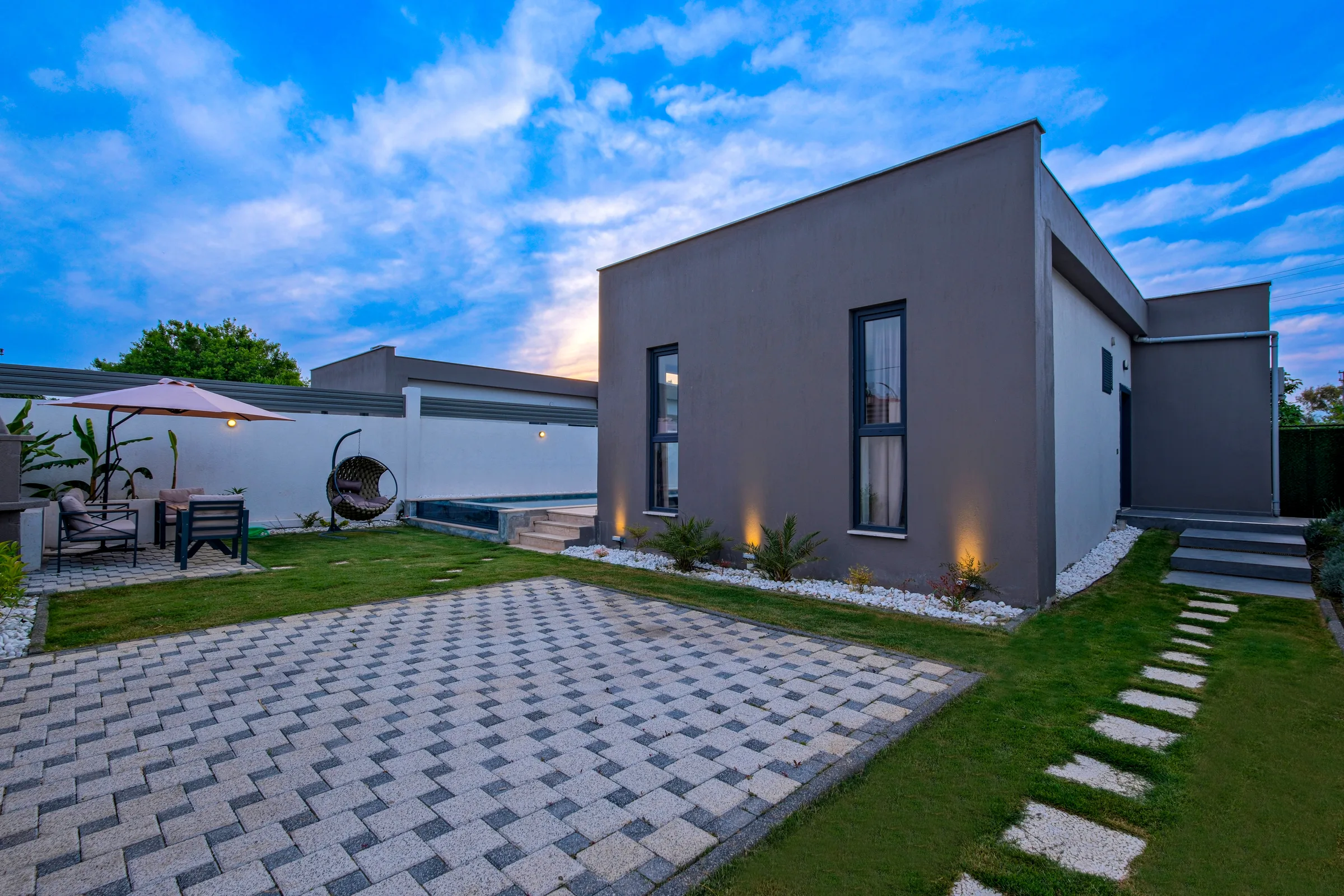
Many people who contact us have already bought a plot in Fethiye, or are about to, and want to know one thing: how do you find the right architect here, especially if you don't live in Turkey full time? The right architect doesn't just draw an attractive house. They read what the plot allows, know the local permit process, keep the budget realistic and know how every drawing will actually be built. From our experience on site, here are the questions we suggest asking.
1. Can you see finished, lived-in buildings?
Renderings show an idea; finished buildings show the result. Ask to see completed projects — in person, or through photos and virtual tours. Look at:
- whether the projects match the scale and type you want (villa, flat, commercial)
- whether the finished building looks as good as the drawings
- the details: window junctions, bathrooms, façade finishes
We keep our completed projects online as 360° virtual tours, so you can judge the workmanship before a first meeting — useful if you are deciding from abroad.
2. How well do they know Fethiye — and your plot?
Fethiye has its own conditions. Most plots with a view are on a slope, summers are hot and humid, and some areas have extra restrictions such as coastal or protected zones. An architect who knows this starts with the imar durumu (zoning status) and the land itself. If a first conversation never touches on your plot or its zoning, expect the design to change later.
We cover slopes in detail in our guide to designing on a sloping plot.
3. Who handles the building permit?
A good project is one that doesn't come back from the municipality for corrections.
Alongside the architectural project, a ruhsat (building permit) needs structural, electrical and mechanical projects, a soil survey and a contract with a yapı denetim (building inspection) firm. When these are consistent and the file is complete, the process moves faster. Ask: "Who coordinates the other projects and prepares the permit file?" Our building permit and occupancy guide explains each step.
Note that permit documents, contracts and municipal correspondence are in Turkish. Make sure you understand what you sign; for legal questions, use an independent lawyer or notary.
4. Does the work stop at drawings?
Most problems in architecture appear in the gap between the drawing and the site. If the architect hands over the drawings and steps away, every question on site falls to the contractor — or to you, possibly from another country. Ask:
- Are construction drawings (details) included?
- Will the architect visit the site during construction, and how often?
- Who decides when something has to change on site?
In our model, the architect who designs the project also runs the build, so site questions are answered the same day by the person who knows the design.

5. Are they realistic about the budget?
Be cautious of anyone who quotes a price per square metre before seeing your plot and brief. A sound cost estimate can only be itemised once the design is defined. A good architect tells you early how design decisions affect cost — large glazed openings, a basement, retaining walls, a pool, the class of finishes. See our guide to building a villa in Fethiye for the main cost drivers.
6. Is the scope of the quote clear?
Two quotes usually differ in scope more than in price. Compare:
- Concept and preliminary design
- 3D visualisation
- Permit drawings and coordination of other projects
- Construction drawings and details
- Site supervision
- Number of revisions included
7. How will communication work?
A house project runs for many months. Agree at the start how decisions will be made and recorded, who will update you and how often, and how you will see progress if you are away. One point of contact makes a real difference when you live abroad part of the year.
8. Professional registration and a written contract
You can ask whether the architect is registered with the professional chamber, and ask for the work to be defined in a written contract with clear scope, delivery stages and a payment plan.
If your project only covers the interior, the process and questions on our interior designer in Fethiye page will help too.
Frequently asked questions
How are architectural fees set in Fethiye?
By the size and type of the building and the scope (concept, permit and construction drawings). A written quote after seeing the plot and your brief is the sound approach.
What should I bring to a first meeting?
The tapu (title deed) and location of the plot, the zoning status if you have it, and your brief: bedrooms, pool, garden and how you will use the house.
Can I work with an architect from abroad?
Much of the design stage can be done remotely with drawings, 3D visuals and written approvals. Official steps may need your signature or a power of attorney — confirm with a notary.
If you are planning a home, villa or commercial building in Fethiye, contact us and we will look at your plot and brief together. More about how we work: Architect in Fethiye.
- Fethiye mimar
- mimar seçimi
- villa projesi
- mimari proje