

· 7 min read
Pet-friendly home design: floors, fabrics, pet doors and the garden
Floors that stand up to claws, fabrics that don't hold hair, a place to wash muddy paws, a pet door and a garden with no escape routes: designing a Fethiye home around a dog or cat.
Architect Okan Çakal
If you share your Fethiye home with a dog or a cat, perhaps one rescued from the street, the house soon shows you where it was not planned for them: claw marks on a new wooden floor, snagged threads on the sofa, sandy paw prints across the living room after every trip to the garden. From our experience on site, a handful of decisions taken at the design stage keep both the house and the animal comfortable for years. Your pet's health and behaviour are questions for your vet; here we deal only with the house.
1. Trace your pet's day on the plan
Following one ordinary day of your animal's life across the floor plan tells you more than any catalogue. Where does it come in from the garden? Where are paws wiped, where is it washed, where do the food and water bowls go, where does it sleep in the afternoon, and where does it stay when you are out? A cat's urge to climb and a dog's habit of rushing the door or digging are part of the same route. Once it is drawn, you can see which rooms need a tough floor, where a niche would help and where a door that can be closed is worth having.
2. Floors: claws, wet paws and grip
We judge floors in a pet home on three things: resistance to scratching, to liquids and to slipping.
- Porcelain tiles: a very common floor in Turkish homes, and one of the toughest against claws and spills. Polished finishes, though, are slippery for paws and people alike, and older dogs in particular struggle on them. A matt or lightly textured surface gives grip and hides scratches. Around the feeding corner and litter tray, epoxy grout resists stains and water far better than wide, pale cement grout.
- Vinyl (LVT/SPC): quieter and warmer underfoot, and it softens the click of claws. Scratch resistance depends on the top wear layer, so try a key on a sample before you choose. With click-fit planks, watch for liquids seeping through the joints.
- Wood: softer species and glossy lacquers show claw marks immediately, and urine can soak in and leave dark stains. If you want wood anyway, a hard species with a brushed, matt oiled finish hides marks and can be repaired in patches.
Loop-pile rugs catch claws; short-pile, flat-woven and washable rugs are more practical. Our flooring guide compares the main materials in more detail.
3. Fabrics, furniture and walls
With upholstery, what matters most is how tight the weave is. Tightly woven fabrics don't hold hair on the surface and are hard for claws to pull; looped bouclé and loose weaves wear out within months. Performance fabrics treated against stains, and removable covers that go in the washing machine, are the easiest option. Leather doesn't hold hair and wipes clean but shows claw marks. Linen is cool and washable, but loosely woven linen won't survive a cat. One small trick: a mid-tone close to your pet's coat colour hides hair between cleans.
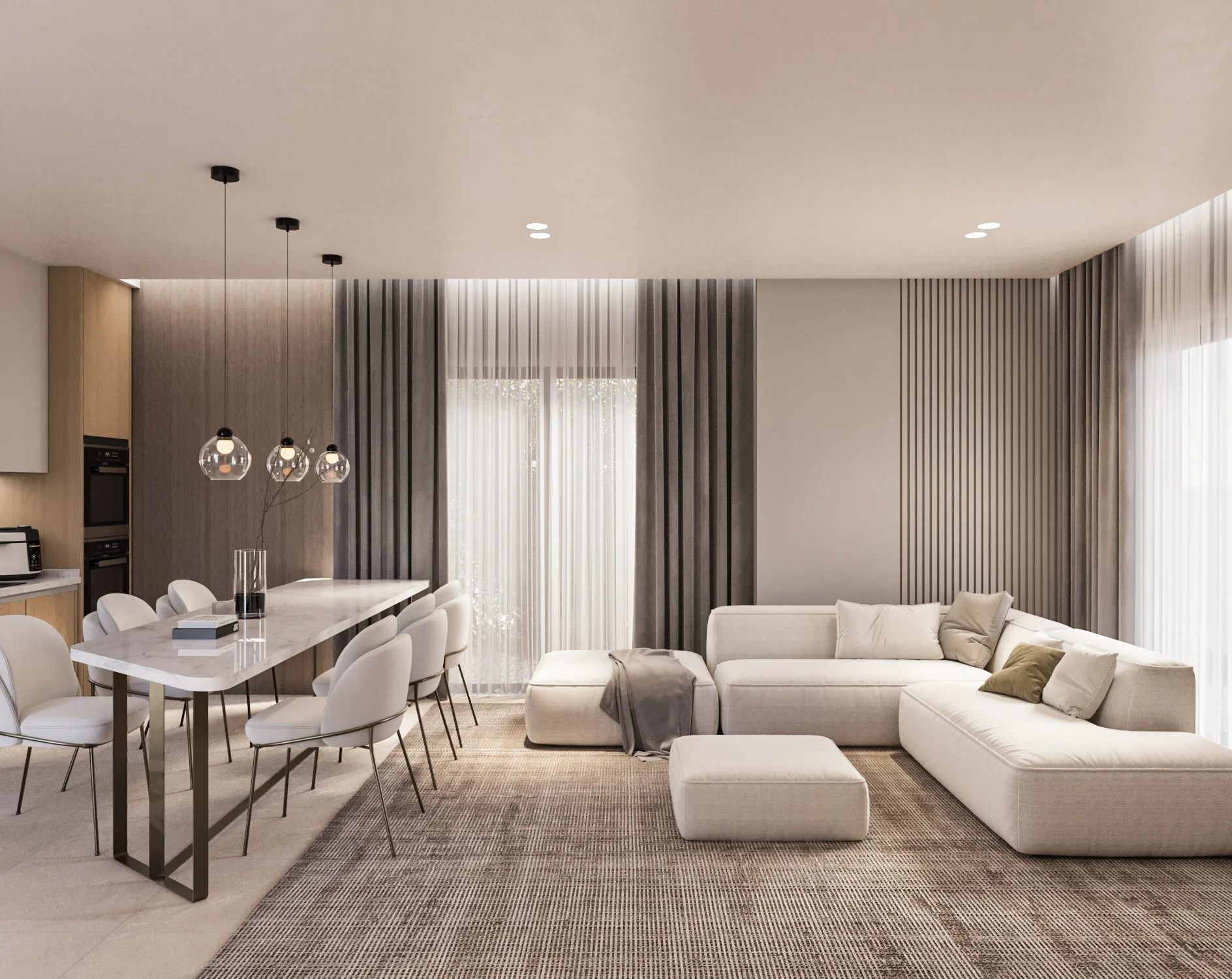
There are two sensible approaches to furniture: either raise the sofa high enough for a vacuum or robot vacuum to get underneath, or choose a closed base so the animal can't crawl under and gather hair there. If you use a robot vacuum, show level thresholds and a docking spot on the plan. In hallways, on door frames and at the height where a dog brushes past, washable paint and corner guards keep walls looking clean.
4. Somewhere to wash, feed and store
Muddy paws in the winter rains and sandy coats after the beach should be dealt with before they reach the living room. An outdoor shower by the garden door, ideally with warm water, or a raised shower tray with a hand shower in the laundry room, are the most practical answers. Fit the drain with a hair trap and slope the floor to a floor drain.
A drawer or niche in the kitchen plinth for food and water bowls keeps them out of the way at night and stops splashes spreading. A litter tray needs a ventilated spot where smells don't reach the living areas; a cupboard section with a cat-sized opening, in a bathroom or under the stairs and paired with an extractor fan, works well. A compartment in the hall cupboard for leads, food, towels and the travel carrier keeps daily kit together.
5. Pet doors, insect screens and balconies
Decide early where a pet door will go. Many Turkish homes have a steel front door, and cutting a flap into it weakens both security and insulation; a back door to the garden, a wall or a glazed panel is a better place. In double glazing, the glass has to be made with the opening from the start. Microchip or lockable flaps that only open for your own animal also keep Fethiye's many street cats outside.
In a home with pets, the surface that wears fastest is the route the animal takes most; that is where the budget should go.
Standard insect screens are torn by claws quickly; heavier pet-resistant mesh is made for exactly this. For cats, windows with lockable or restricted opening and netting on balconies are worth considering. In a site (a gated complex with its own management), check the management plan (yönetim planı) and speak to the management before fitting balcony netting.
6. Garden, pool and summer heat
The places where dogs escape from a garden are usually predictable: the gap under a gate, the bottom of a fence, gaps in a boundary hedge, and any low wall they can scramble over. For diggers, a buried edging strip along the fence line helps, and a self-closing hinge on the garden gate stops it being left open. With a pool, plan steps an animal can easily climb out on, and consider a fence or gate separating the pool area.

Dark stone gets very hot at midday in a Fethiye summer; light paving, a shaded corner and water that is always within reach let your pet use the garden. Ask your vet which plants to avoid before the planting list is final; more on garden planning in our article on villa gardens and landscaping.
Indoors, air-conditioning units should be placed so they don't blow straight at the pet's bed, and filters need cleaning more often because of hair. If you let your villa and plan to accept guests with pets, the durable-materials advice in our rental villa design article matters twice as much.
How we bring floors, furniture and storage together around the way you live is explained on our interior design in Fethiye page.
Frequently asked questions
Are tiled floors too slippery for an older dog?
Polished tiles can be. Matt or lightly textured porcelain gives better grip, and on an existing floor, washable runners along the main routes help.
Can I fit a pet door in a steel front door?
It is not a good idea, as cutting the door weakens its security and insulation. A back door, a wall or a glazed panel made with an opening is a better place.
Can I put cat netting on my balcony in a complex?
It depends on the complex's management plan and on the management's decision. Check the rules with the management in writing before anything is installed.
If you would like to plan a home around your dog or cat, get in touch and we will go through floor and fabric options with real samples.
- evcil hayvan dostu ev
- zemin kaplaması
- döşemelik kumaş
- iç mimari
- Fethiye