

· 5 min read
Choosing Floors for a Fethiye Home: Natural Stone, Porcelain or Wood
The floor is the surface you touch most and the hardest to change later. We compare natural stone, porcelain tiles and wood flooring room by room for Fethiye homes.
Architect Okan Çakal
Wood in the bedrooms, marble in the living room, or one tile everywhere? It is one of the first questions owners bring to an interior design meeting, and for good reason: furniture moves and walls get repainted, but a floor usually stays for many years. Below we compare the three main families from our experience on site, with the Fethiye climate and the way holiday homes are actually used in mind.
1. Questions to answer before choosing
How the house is lived in matters more than the sample in the showroom:
- Is the house used all year, or closed for the winter while you are abroad?
- Is it let to holidaymakers, with suitcases, wet swimwear and changeover cleaning?
- Are there small children, older family members or pets?
- Do people walk straight in from the garden or the pool?
- Is underfloor heating planned?
- How much care are you willing to give the floor?
The answers narrow the choice room by room.
2. Natural stone: character with care
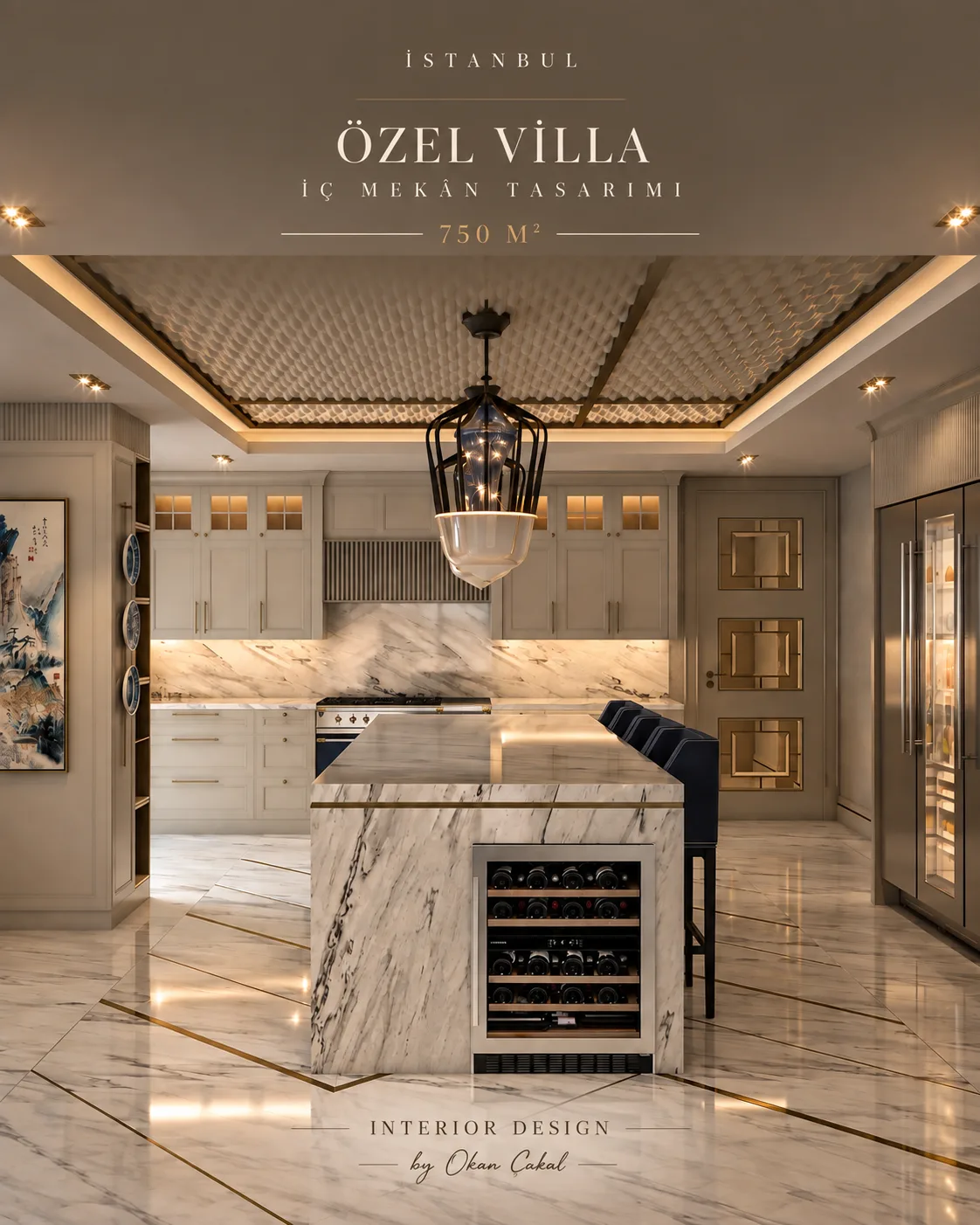
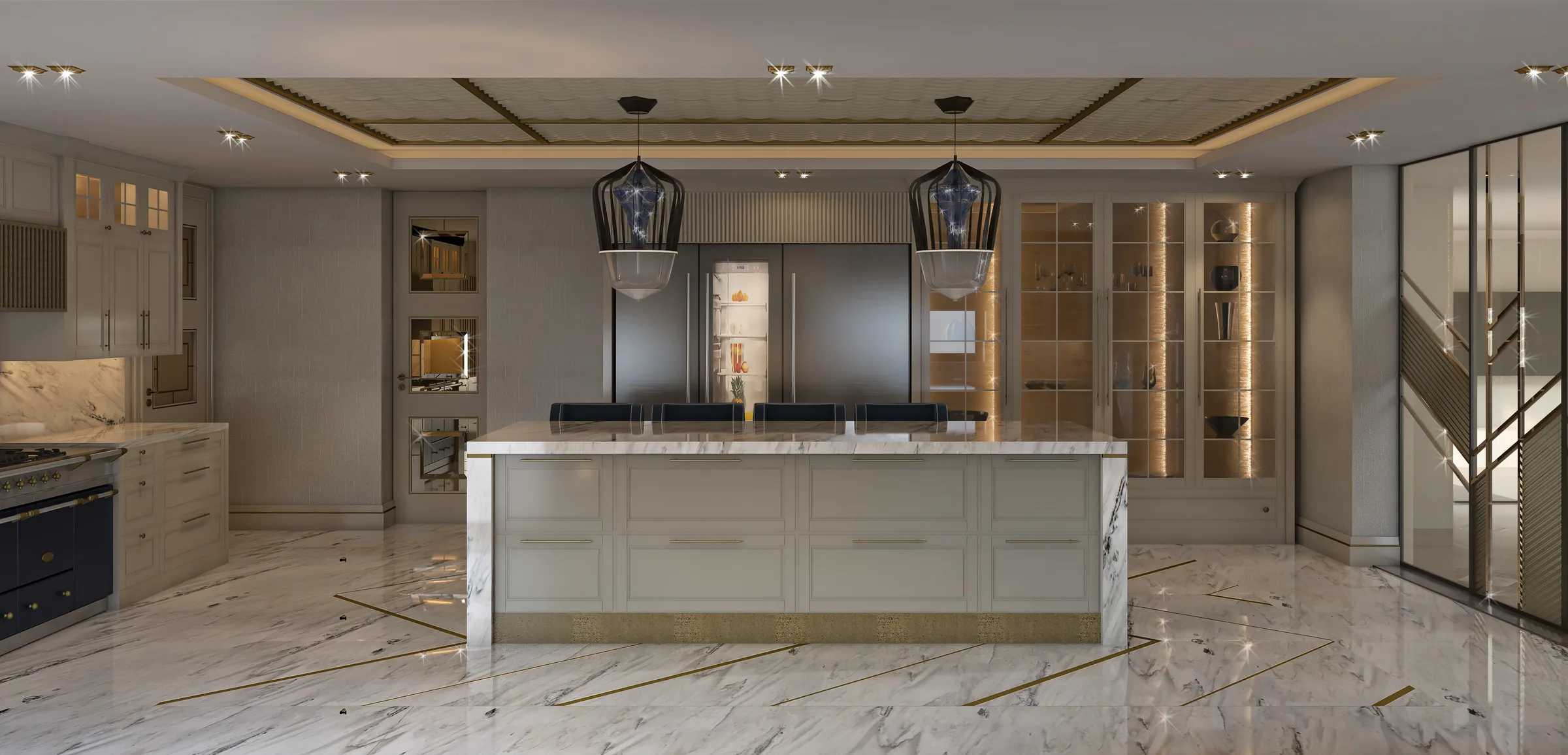
Marble, travertine and limestone give a calm weight to a room, each slab with its own veining and tone, and they stay pleasantly cool in summer. In return they are porous and need regular sealing. Marble and limestone are sensitive to acids: lemon juice, vinegar or wine can leave dull marks on a polished surface. If you want stone in a kitchen, we choose the finish (polished, honed or brushed) to match how you cook and entertain.
Wherever possible, see the actual slabs and plan their layout before laying. Vein direction and tonal shifts shape the finished floor.
3. Porcelain tiles: hard-wearing and seamless
Porcelain does not absorb water, resists stains and needs very little upkeep. Stone, concrete and wood-look ranges allow very different moods. For holiday lets, homes closed over winter and rooms opening onto the garden, it is usually our first suggestion.
The result depends on installation. Large-format tiles give fewer joints and a quieter look, but they demand a very flat screed; on an uneven base, edges lip and tiles sound hollow underfoot. So we check the screed and level it where needed. Grout close to the tile colour keeps the floor reading as one surface.
4. Wood: warmth versus humidity
Wood feels warm in bedrooms and living rooms and is pleasant barefoot. But Fethiye's humid winters are hard on it. A house closed for the winter gets damp; in summer the air conditioning dries it out. Solid boards move with these swings, opening gaps or cupping.
That is why we usually recommend engineered flooring, a real wood top layer on a stable plywood core, over solid wood. Measuring screed moisture, letting the boards acclimatise and leaving an expansion gap at the walls are non-negotiable steps. At bathroom doors and garden exits, switching to stone or tile is safer than running wood through.
A floor is chosen for the way a house is lived in, not for the showroom.
5. Practical pairings by room
- Entrance and hall: sand and dust from the beach; porcelain or a hard natural stone.
- Living and dining: in an open plan, one material throughout makes the space feel larger.
- Kitchen: porcelain, or stone with a suitable finish.
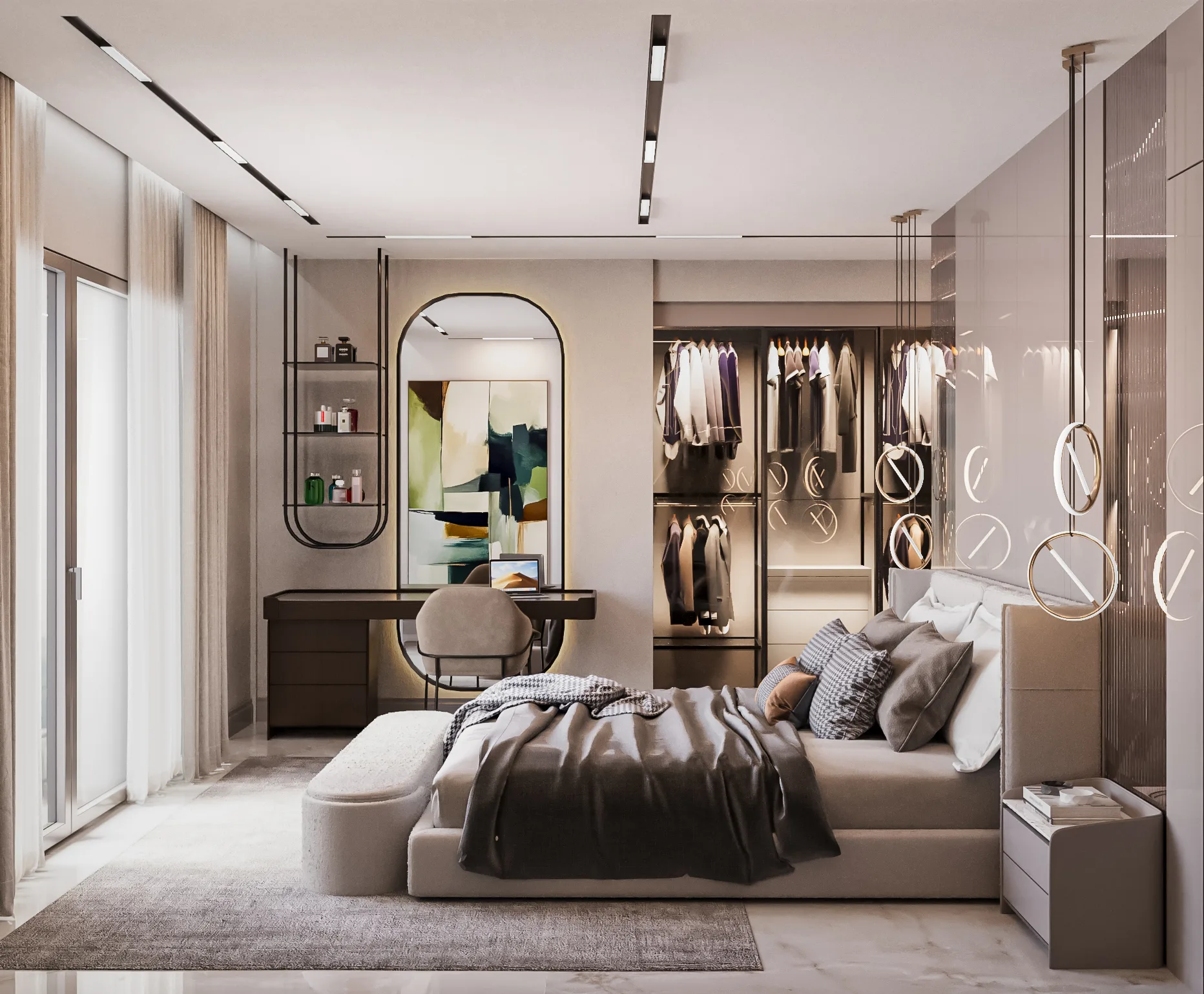
- Bedrooms: engineered wood or warm-toned tile, with rugs for acoustics.
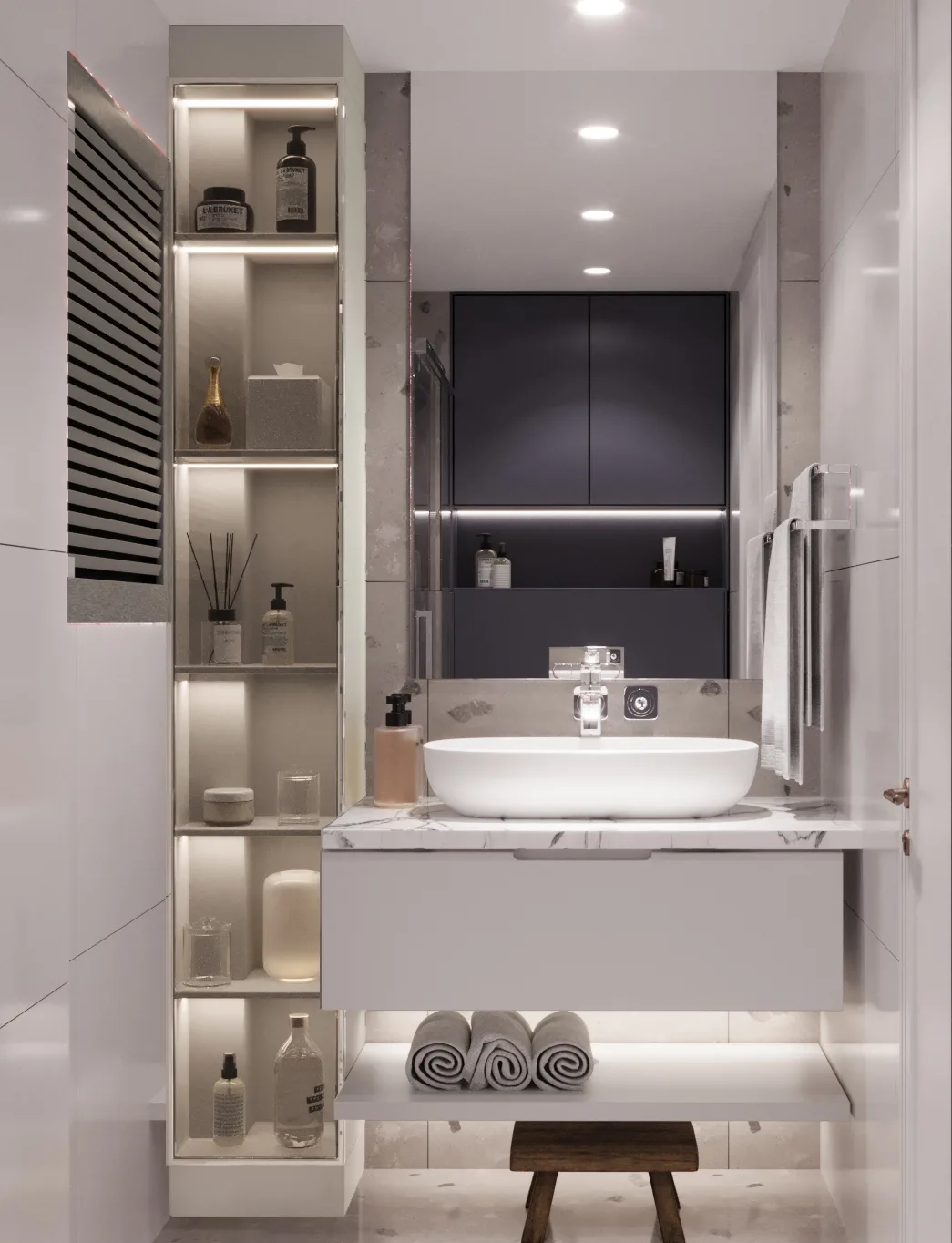
- Bathrooms: stone or tile with a suitable slip rating for wet areas.
We discuss floor continuity in open-plan spaces in our article on open-plan living and kitchen design.
6. Hidden details that decide the result
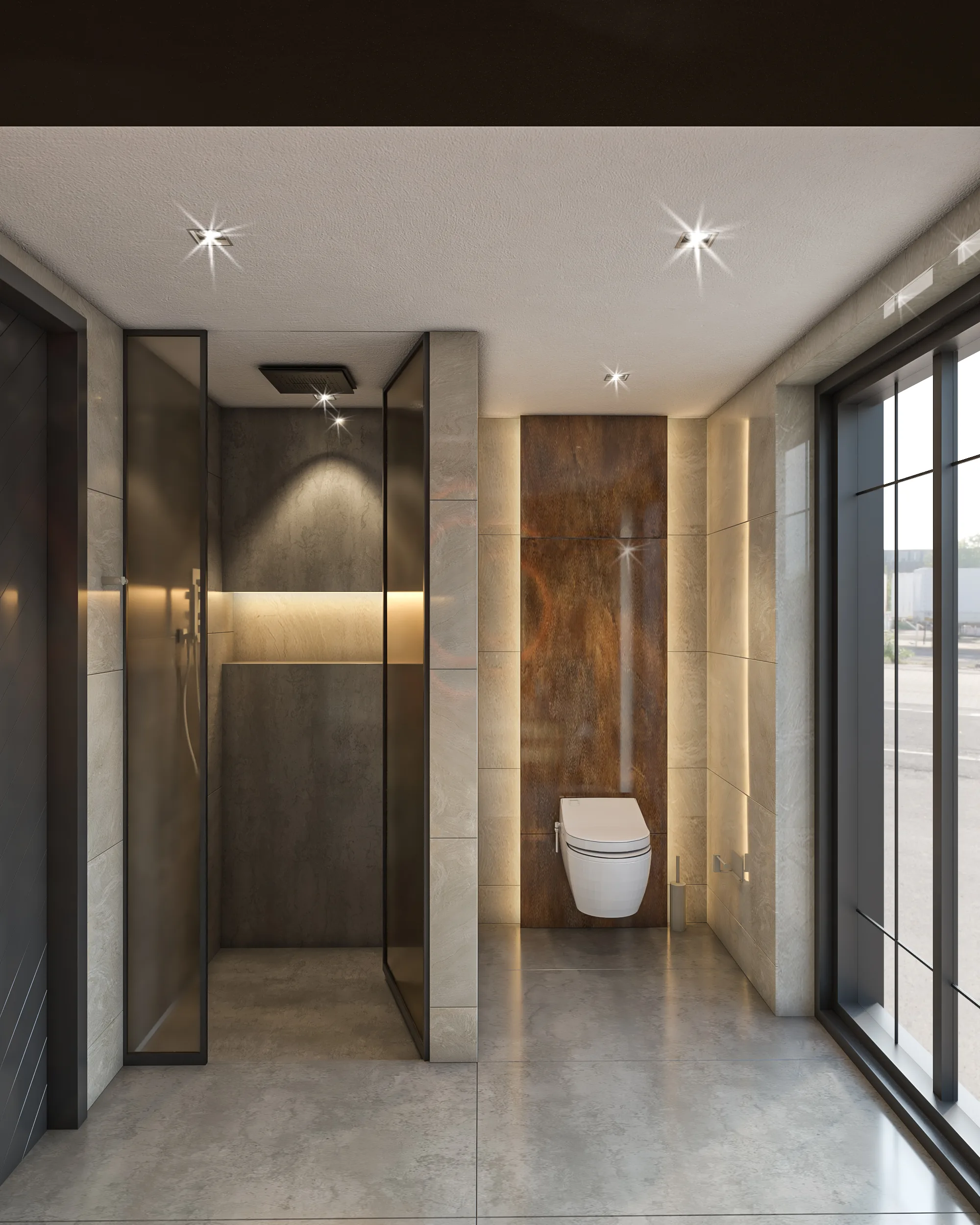
- Thresholds and levels: different materials should meet flush; the thickness difference between wood and tile is built into the screed.
- Underfloor heating: stone and tile conduct heat well; wood must be a product rated for it.
- Acoustics: in multi-storey villas, hard floors carry sound downstairs; impact insulation under the screed helps.
- Skirting: protects walls during wet cleaning; chosen with the floor.
If you are abroad when decisions are made, we prepare samples and 3D visuals so you can approve finishes in writing, and the contract lists each floor material by grade and area. For outdoor floors, heat and slip on terraces, see our article on choosing materials for Fethiye's climate. How we decide floors together with furniture, lighting and services is described on our interior designer in Fethiye page.
Frequently asked questions
Which floor is most practical for a holiday let?
With heavy use, wet feet and frequent cleaning, porcelain tiles usually need the least care. If you want warmth in the bedrooms, engineered wood is an option there.
Can new flooring go over existing tiles?
Sometimes, if the existing floor is sound and level, but it raises the floor and affects doors and thresholds. We inspect on site and decide together whether to remove or overlay.
Will wood floors survive a house closed all winter?
Engineered wood, correctly installed with expansion gaps, copes far better than solid boards. Some ventilation or dehumidification while the house is closed also helps.
To plan your floors as part of the whole interior, get in touch and we will review the options with samples and 3D visuals.
- zemin kaplaması
- doğal taş
- porselen seramik
- parke
- iç mimari Fethiye