

· 6 min read
Bathroom renovation in Fethiye: order of works, waterproofing and tiles
What decides how a new bathroom performs is not the tile you see but the layers underneath. The order of works, why waterproofing matters and how to choose finishes.
Architect Okan Çakal
If you have bought a resale apartment or villa in Fethiye, the bathroom is often the first room you want to redo. It is also the room where the most trades meet in the smallest space: plumbing, waterproofing, tiling, sanitaryware, furniture and lighting, all within a few square metres. A mistake in one layer undoes the others. Here is how a bathroom renovation should run and what we watch for, from our experience on site.
Start with the plan, not the hammer
We start with a drawing. Shower or bath? One basin or two? Where does the WC go, and how much room is there for storage and towels? These choices fix the position of every pipe and socket. Once the plumbing is in and the tiles are on, changing them means breaking the bathroom open again.
What we look at when planning:
- Where the existing soil pipe runs and how far the WC can realistically move
- Which way the door opens and how much free space there is to move around
- Natural light, and whether there is a window or room for mechanical extraction
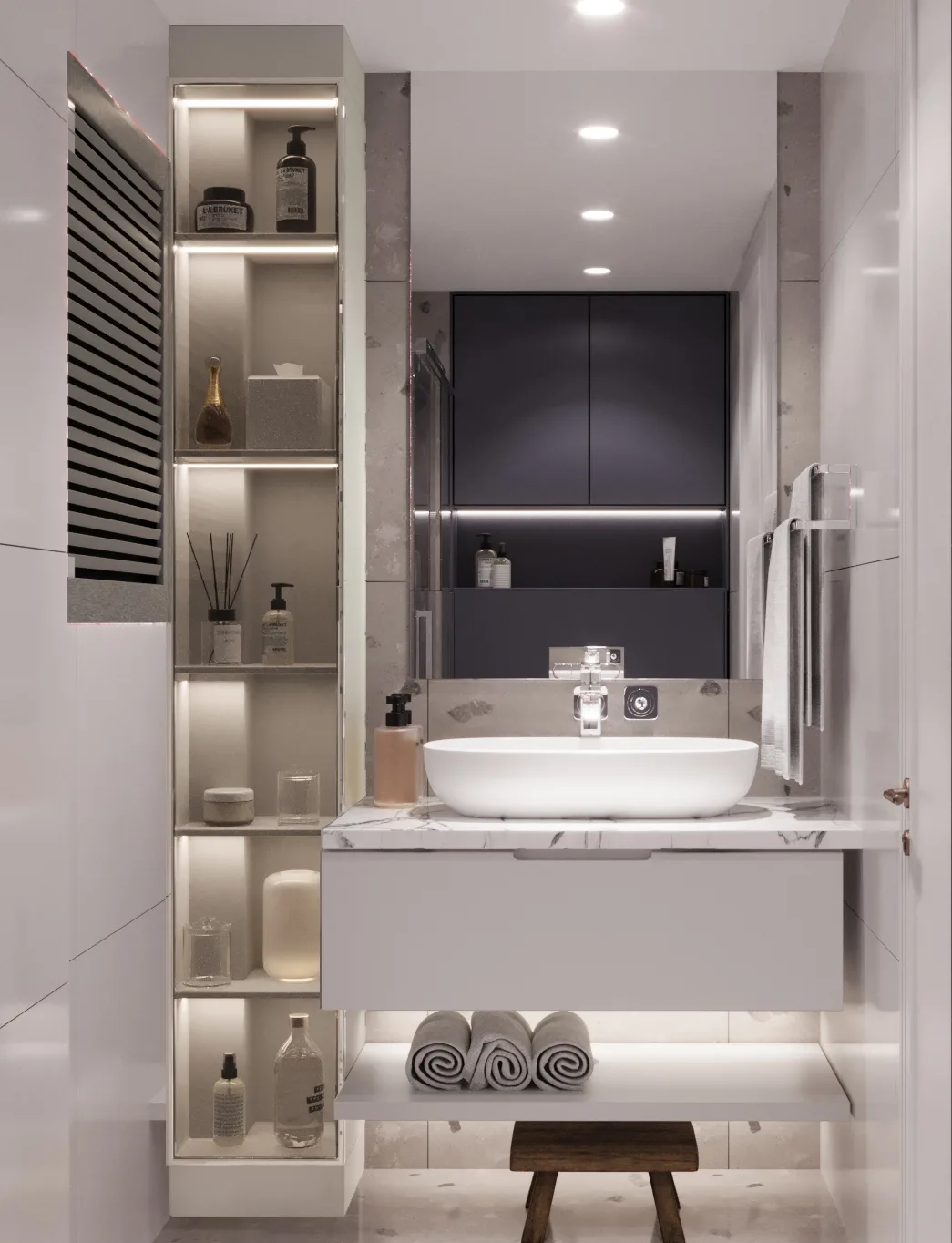
- Storage: cabinets, niches and towel rails
The order of works, step by step
A sound bathroom renovation usually runs in this order:
- Strip-out: removing old tiles, sanitaryware, cabinets and, if needed, the old screed; taking the rubble away
- Plumbing and electrics: new supply and waste pipes, cables and socket points; a pressure test before anything is closed up
- Waterproofing: a continuous membrane on the floor and shower walls, including corners and pipe penetrations
- Screed and falls: a floor that slopes correctly towards the drain
- Tiling: floor and wall tiles, then grouting
- Sanitaryware and taps: WC, basin, shower set and mixers
- Furniture: vanity unit, mirror and storage
- Lighting and final checks: light fittings, silicone joints, water and drainage tests
Skipping steps, or letting them overlap, is behind most of the problems we are called in to fix.
Why waterproofing is critical
Waterproofing is invisible when it is done, and very visible on the ceiling below when it is not.
Tiles and grout on their own are not waterproof. Water that gets through grout lines and hairline cracks reaches the screed and the wall behind. Without a membrane, it eventually shows up as stains on the ceiling below, blistering paint or mould. At that point the only fix is to take the new tiles off again.
So we never treat waterproofing as a line to cut. We reinforce corners and pipe penetrations, take the membrane well up the walls in the shower area, check it before tiling starts and follow the manufacturer's drying recommendations. In an apartment block, this is also what keeps you on good terms with the neighbours downstairs.
Shower or bath, and what a wall-hung WC is
Shower or bath comes down to how you use the room. A bath can be useful with small children; in most bathrooms a level-access, step-free shower is easier to use and to clean. With a step-free shower, the floor falls and the drain type (a point drain or a linear channel) matter even more.
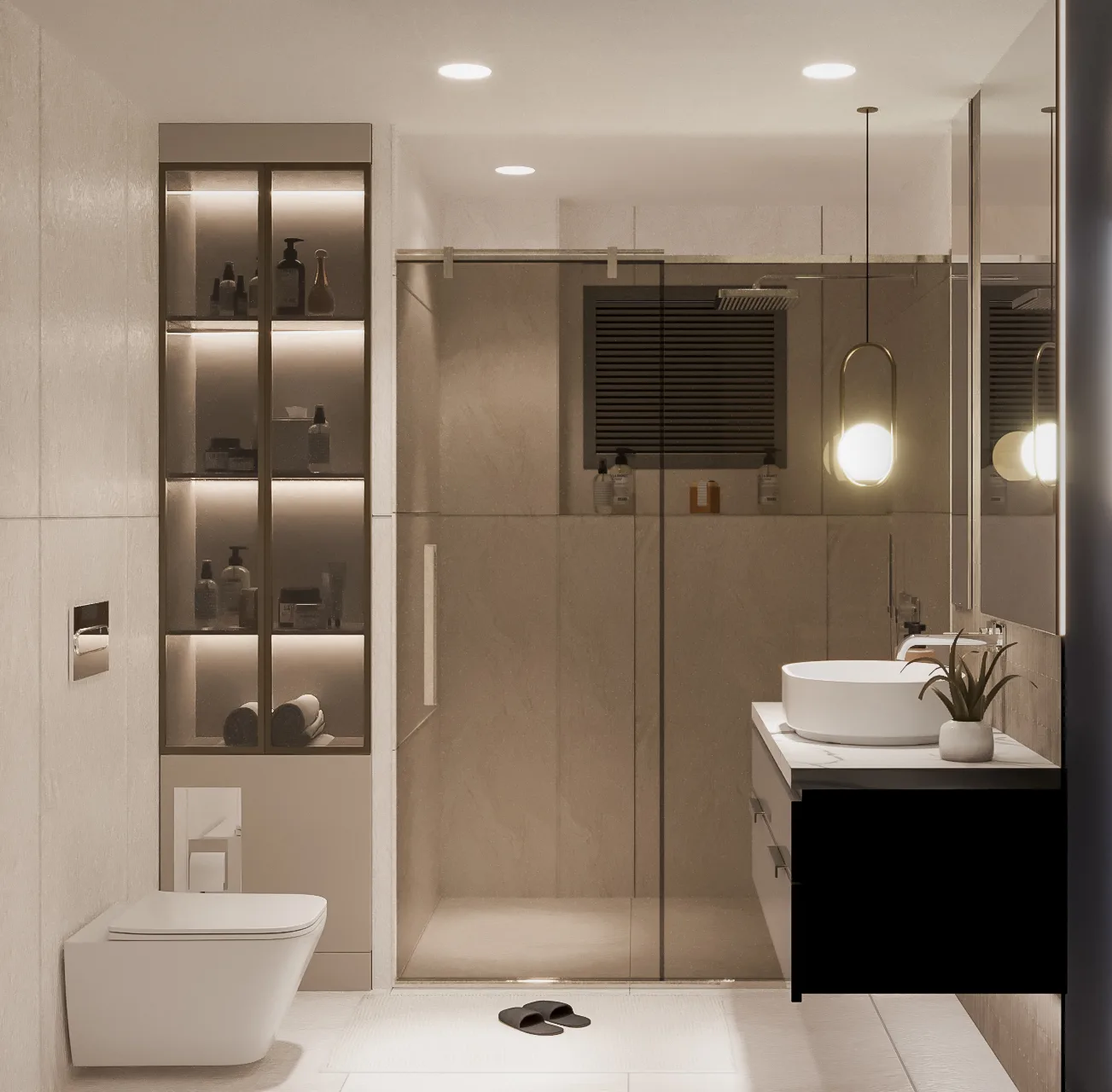
Wall-hung WC and concealed cistern: the toilet is fixed to the wall rather than the floor, and the cistern is hidden inside the wall on a steel frame. Only the flush plate is visible. The floor underneath stays clear, so cleaning is easier and the room looks calmer. The cistern is serviced through the opening behind the flush plate, which is why a good-quality frame and careful installation matter.
Humidity and ventilation in Fethiye
Fethiye's humid air makes bathroom ventilation a necessity rather than a nice extra. In bathrooms with no window or only a small one, we plan an extractor fan with a proper duct to the outside. Where steam from hot showers has nowhere to go, ceiling paint blisters, grout turns black and timber cabinets swell.
This is more noticeable in homes that are let, or closed up while the owners are abroad. A gap under the door for air to flow, moisture-resistant ceiling paint and cabinet carcasses suited to damp conditions complete the picture. If the house stands empty for long periods, it is worth arranging for someone to air it regularly.
Choosing tiles: slip resistance, size and grout
We think about use before looks:
- Slip resistance: floors, and shower floors in particular, need a surface that does not get slippery when wet. Glossy, polished tiles belong on walls.
- Size: large-format tiles mean fewer grout lines and a cleaner look, but on a sloping shower floor they may need to be combined with a linear drain or a smaller format.
- Grout: grout colour and type affect cleaning directly. In wet areas we use grout that resists water and staining.
- Workmanship: large tiles need a very flat base and an experienced tiler, otherwise you see lips at the joints.
Common mistakes
- Tiling over old, tired plumbing
- Skipping waterproofing, or only doing it inside the shower
- Floors that do not fall towards the drain, leaving water in the corners
- Forgetting ventilation
- Choosing materials after work has started
- Leaving no access to the cistern and pipework for future maintenance
If you are planning a wider renovation, our posts on what drives renovation costs and the kitchen renovation guide may help.
How we plan bathroom and kitchen work alongside the rest of a renovation is covered on our renovation in Fethiye page.
Frequently asked questions
How long does a bathroom renovation take?
It depends on the size of the room, the state of the existing plumbing and how quickly the chosen materials can be supplied. We fix the timeline after a site visit, in a written schedule with start and finish dates.
Can new tiles be laid over the old ones?
Sometimes it is technically possible, but we do not recommend it without knowing the condition of the plumbing and waterproofing underneath. We assess this on site before deciding.
Can the renovation go ahead while I am out of the country?
Yes, provided the materials and details are agreed in writing before work starts. A single point of contact who manages both the design and the site keeps decisions from piling up while you are away.
If you are thinking of renovating your bathroom, get in touch and we will look at it on site and prepare an itemised quote. More on our Renovation & Refurbishment page.
- banyo yenileme
- banyo tadilatı
- su yalıtımı
- Fethiye