

· 7 min read
Kitchen cabinet materials: lacquer, acrylic, laminate and veneer
Choosing a door colour is easy; knowing which surface will survive a damp winter, a sunny window and dozens of openings a day is not. Carcass, doors and hardware, in order, for a kitchen in Fethiye.
Architect Okan Çakal
A swollen base under the sink, a bloated panel next to the dishwasher, a door by the window that has faded, a drawer that sags: these are the first things we look at when we visit a kitchen that needs replacing, whether in an apartment in Çalış or a villa that has spent several winters closed up. None of them is about colour. All of them come down to the choice of carcass, door finish or hardware. From our experience on site, here is how to choose a kitchen layer by layer, working back from the problems we see most.
1. The carcass: hidden, but the first to suffer
Cabinet carcasses are usually made from chipboard or MDF-based panels. For wet areas, moisture-resistant boards are used (in Turkey they are often recognised by their green core). But how the cut edges are sealed matters as much as the board itself: water almost always gets in where the edge banding has been left open or has not bonded well. Ask for the hidden bottom and back edges to be banded too.
Where the carcass works hardest:
- Under the sink: trap leaks and wet sponges; a waterproof tray on the cabinet floor protects it for years.
- Beside the dishwasher: steam escaping when you open it soaks the side panel and the underside of the worktop; that is what steam-protection strips are for.
- Next to the oven and fridge: heat and condensation.
- Against external walls: the wall gets cold in winter and moisture collects behind the units; a small ventilation gap at the back prevents mould.
2. Door finishes: strengths and weak points
- Lacquer: paint built up in layers over MDF, in matt, satin or gloss. It offers any colour and suits framed and profiled doors. A hard knock can chip it or crack an edge; it can be touched up, but that takes skill. Gloss lacquer shows scratches and fingerprints more; matt lacquer can slowly polish up where hands touch it most.
- Acrylic (high gloss): an acrylic sheet bonded to MDF, giving a deep shine that looks good on slab doors. Fine scratches catch the light and it cannot be touched up like paint; a damaged door is usually replaced.
- Laminate and melamine: melamine is an economical surface, also common on carcasses; high-pressure laminate stands up much better to knocks and scratches. Practical for busy kitchens and rental villas; the edge banding is its weak point, and framed profiles aren't possible.
- Wood veneer: a thin leaf of real timber glued to MDF. It gives genuine wood grain; its tone changes in sunlight, and the varnish or oil finish needs care over time.
- Solid wood: warm and repairable, but it moves with humidity and temperature, and wide flat panels can warp. That is why solid doors are traditionally made as a frame with a panel.
You may also be offered foil-wrapped (membrane) MDF; ask from the start about the risk of the foil lifting next to the oven or in direct sun.
3. Framed or slab doors?
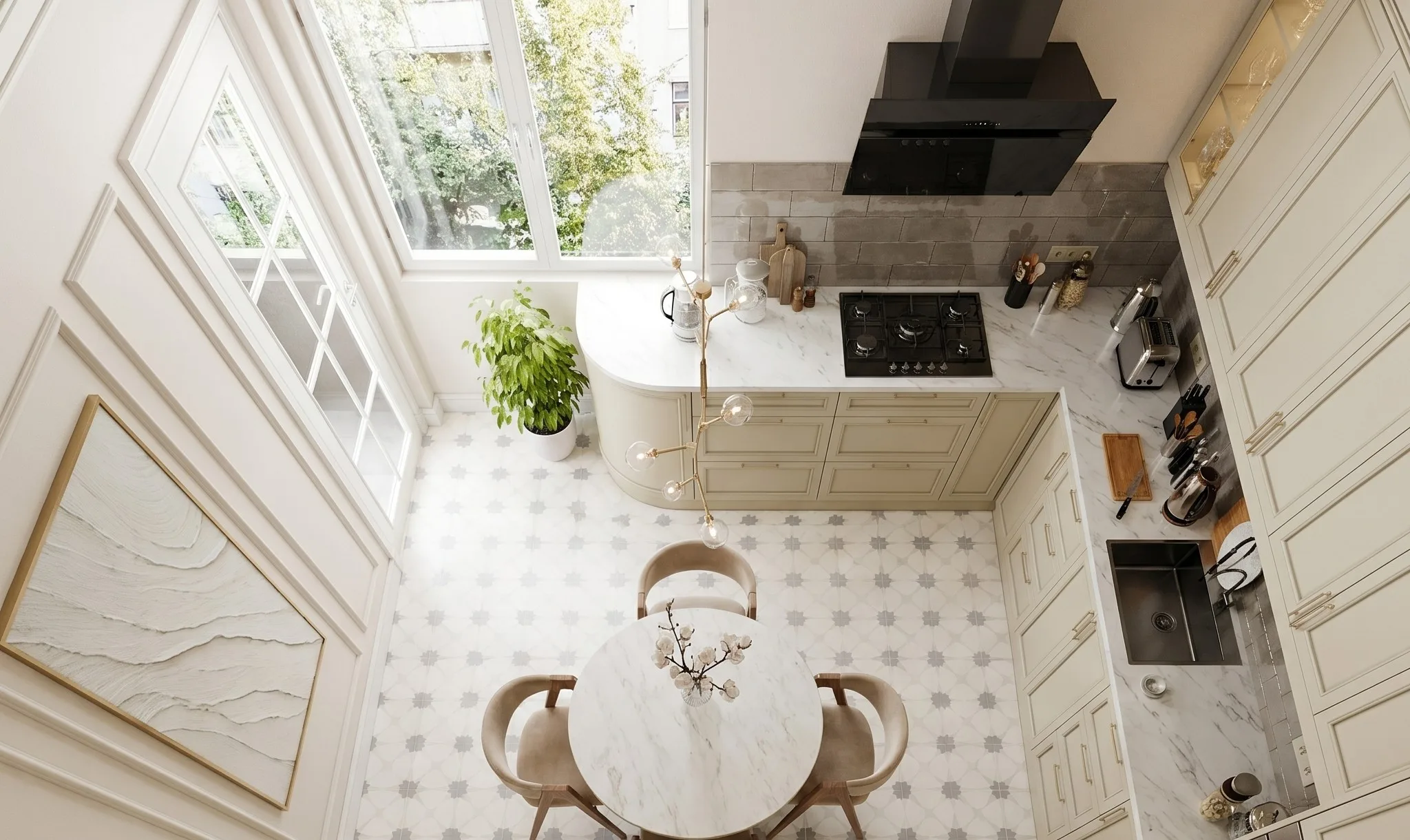
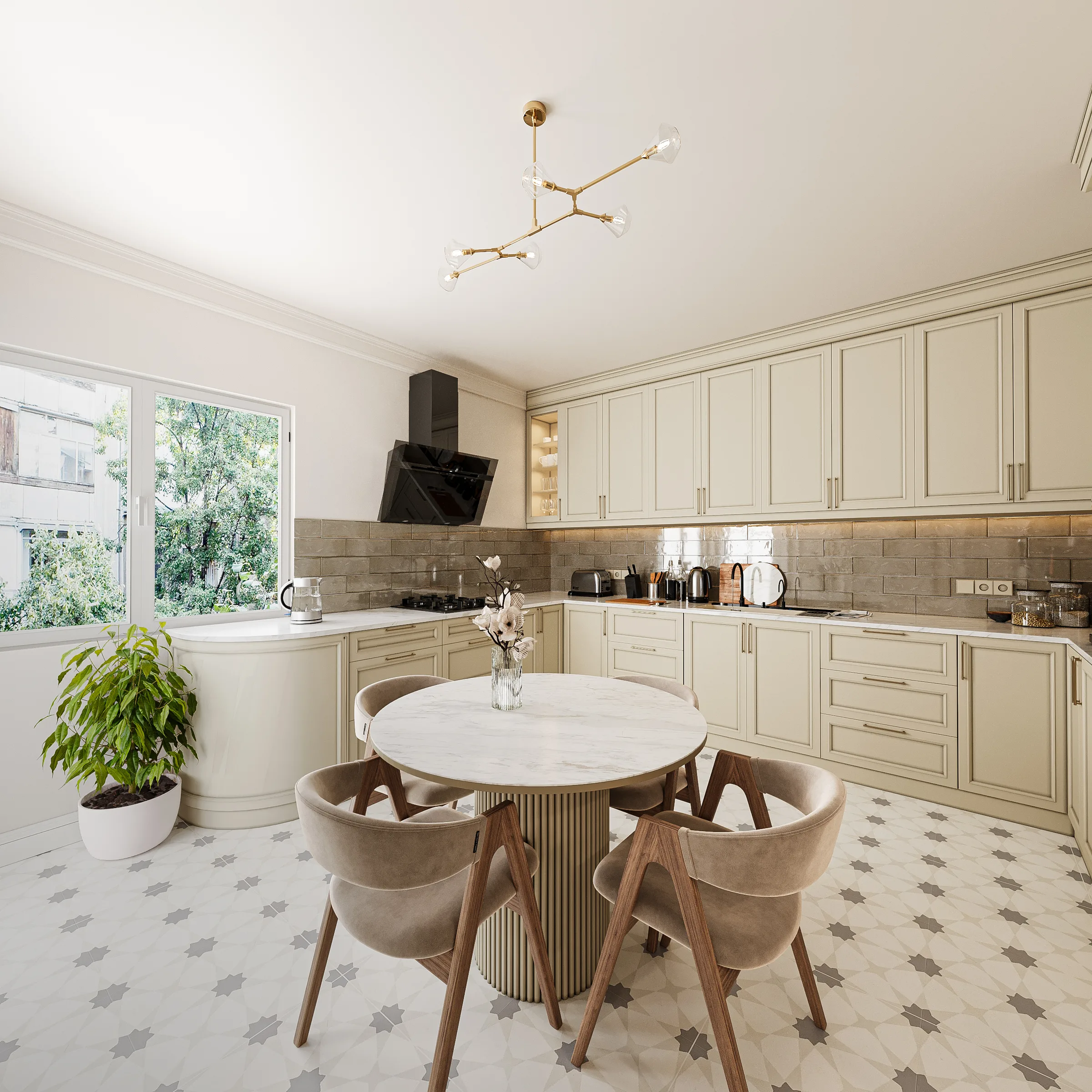
Framed doors (often called shaker style) are the classic choice. Used with restraint they give a kitchen character, but dust and grease collect in the inside corners of the profile and cleaning takes a little more effort. In our Fethiye residential project we used cream framed lacquer doors and brass handles in an L-shaped kitchen; here the frame alone carries the kitchen's classic character.
Slab doors look modern and are easy to wipe. Tall doors, such as on larder units, can bow, so they are planned with straightening fittings and enough hinges.
4. Handles, handleless rails and push-to-open
The handle is the part of a kitchen you touch most, so choose it for your hand and the size of the door. In a narrow kitchen, handles that stick out catch on hips and clothes. A handleless rail (often called a gola profile in Turkey) is a channel above the door that gives you a finger grip; it looks clean, but it collects crumbs and dust and takes its own depth out of the storage. Push-to-open removes handles altogether, though it leaves fingerprints where you press, and with small children or grandchildren around, doors can open unexpectedly.
5. Hardware: the mechanics that work every day
However good the door finish, a hinge out of adjustment or a sagging drawer makes a kitchen look tired. What we look for:
- Soft-close hinges that can be adjusted on site
- Full-extension drawer runners rated for the weight of pans
- Gas-strut lift-up mechanisms on wall units
- Corrosion-resistant hardware in homes near the sea, especially under the sink
- A well-known, widely available hardware range, so the same hinge can still be found years later
The doors are the face of a kitchen, but what ages it early is usually an edge band nobody can see.
6. Humidity and sun in Fethiye
Doors next to a window catch the sun from the same angle every day. Veneer will change tone; some foil and acrylic finishes can yellow. For those doors, choose a finish with known sun resistance or plan shading for the window. In a holiday home closed for the winter, the inside of cupboards gets damp; leaving doors ajar when you leave and arranging some form of dehumidification in the house helps prevent mould. More on the climate's effect on materials in our article on materials for Fethiye's climate.
7. Renovating: new doors or a new kitchen?
If the carcasses are sound, with no swelling under the sink, units still level and no mould at the back, replacing just the doors, hardware and perhaps the worktop is a sensible option. New doors are made to the existing carcass sizes, and the visible front edges of the carcass should match the new doors. If the layout will change, the plumbing is being renewed or the base under the sink has rotted, a full replacement is the right call. Layout and storage are covered in our kitchen renovation guide, and made-to-measure work in our article on bespoke versus ready-made furniture.
How we design cabinets together with the worktop, services and lighting as one project is explained on our interior design in Fethiye page.
Frequently asked questions
Lacquer or acrylic?
Lacquer suits those who want any colour or a framed door; acrylic suits those who want a flat, deep-gloss surface. Lacquer can be touched up, whereas a damaged acrylic door is usually replaced.
Which doors are most practical in a rental villa?
High-pressure laminate or a well-applied matt finish, combined with sturdy hardware, wears least over a busy season. Choosing a colour and hardware that can be reordered makes replacing a single door easy.
Is it worth replacing only the doors?
Often, yes, if the carcasses are sound, level and show no swelling. If the areas under the sink and beside the dishwasher are damaged, or the layout will change, a full replacement makes more sense.
Our house is closed for months each winter. What should we choose?
Moisture-resistant carcasses with fully sealed edges, corrosion-resistant hardware and a back ventilation gap on external walls matter more than the door finish. Leaving cupboard doors ajar and controlling humidity while you are away also helps.
If you would like to choose materials for your kitchen together, on real samples, get in touch; we will look at the space on site and compare the options in 3D.
- mutfak dolabı
- lake kapak
- akrilik kapak
- mutfak tasarımı
- Fethiye