

· 5 min read
Children's Room Design: A Room That Grows With Your Child
How to plan a children's room that moves from cot to teenager without starting again every few years: fixed and changing elements, storage, safety and Fethiye's climate.
Architect Okan Çakal
No room in a home changes its job faster than a child's: a cot and changing area first, then toys and floor space, then a desk for homework, then a teenager who wants things their own way. Redoing the room at every stage is tiring and wasteful. From our experience on site, the better approach is to plan the room to grow from day one: build what stays properly, and keep what will change easy to swap.
1. Separate what stays from what changes
Start by sorting everything in the room into two groups.
- Stays: fitted wardrobe, flooring, window and blackout system, lighting and socket positions, air-conditioning position.
- Changes: bed, desk, toy storage, wall colour, textiles and decoration.
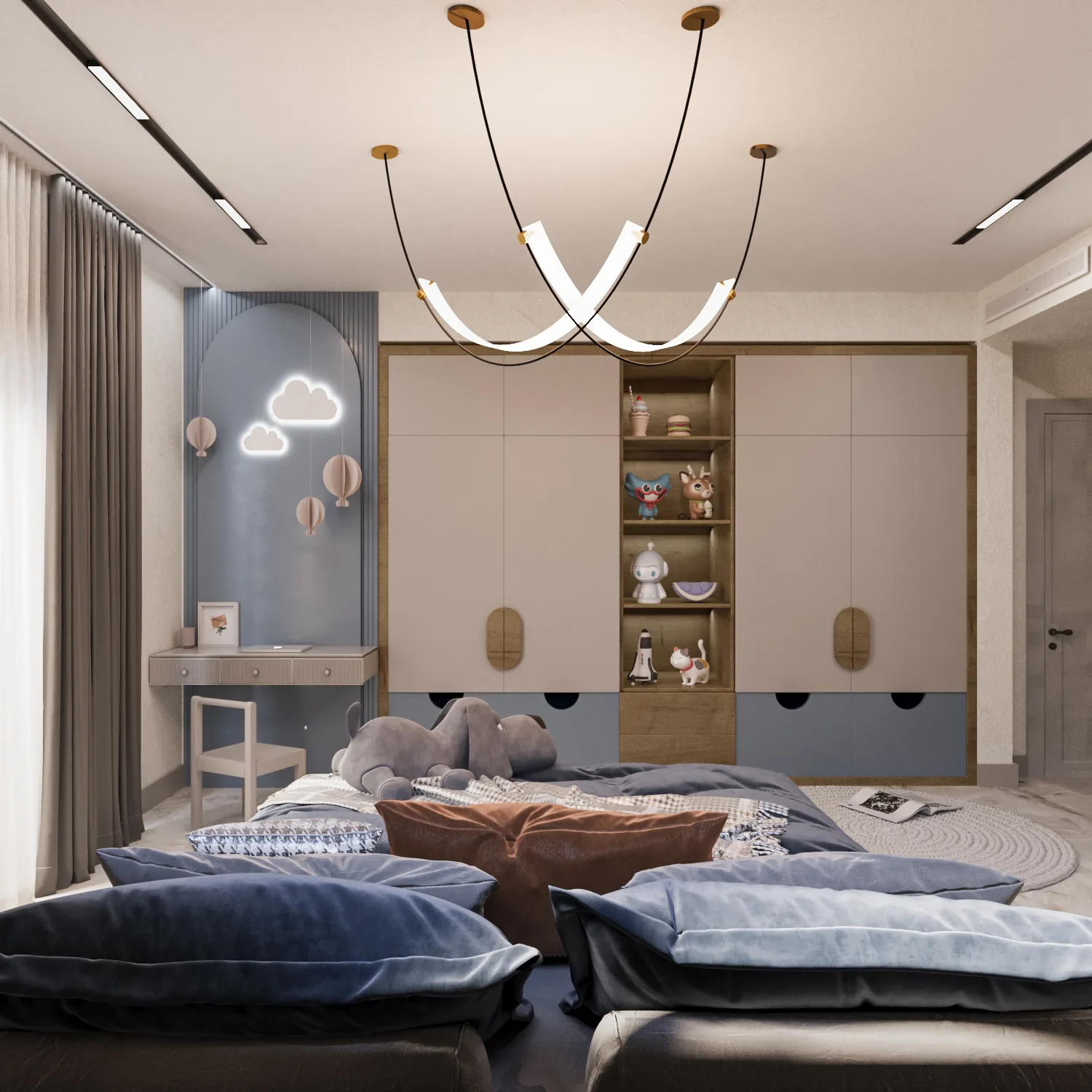
Keep the fixed elements simple and timeless. A wardrobe door with a cartoon theme will be rejected by the child within a few years; a neutral wardrobe can take new colours and accessories at every stage. Let paint, rugs, curtains and bedding carry the character, because they are easy to change.
2. Beds and sleep, from cot to teenager
The bed is the largest piece of furniture and the one replaced most often. We plan for it to grow: the wall that takes a small bed today should take a full single or larger bed later.
When two children share, a bunk or raised bed frees the floor below for play or study. The top bunk should not be too close to the ceiling or the air-conditioning unit, and the unit must not blow straight onto the upper bed. We cover bed and AC placement in our article on bedroom and wardrobe design.
3. Storage at child height
Children tidy up only when they can reach things. So we plan storage in height bands:
- Low: open shelves, baskets and wheeled boxes the child can use alone
- Middle: books, school things and everyday clothes
- High: seasonal clothes, spare bedding and toys out of rotation, in closed cupboards for adults
Make the wardrobe interior adjustable. If shelf and rail heights can move, the low hanging rail for a small child can be raised as they grow, and the wardrobe keeps up without being replaced.
4. The homework corner
Once school starts, the desk becomes the centre of the room. We put it beside the window so daylight falls from the side: with the window behind, the screen reflects; facing it, the child squints. Reserving a wall and sockets for the desk from the start means that turning the play area into a study later needs no electrical work.
An adjustable desk and chair will fit the child for years. Shelves on the wall above keep books off the desktop.
In a child's room the longest-lasting investment is not showy furniture but sockets, light and storage in the right place.
5. Safety: earthquakes, windows and sockets
Fethiye is in an earthquake zone, and in a child's room that means a concrete checklist:
- Wardrobes, bookcases and tall shelves are fixed to the wall; fitted units are safer than freestanding ones.
- No heavy shelves, frames or pendant lights above the bed.
- Upper-floor windows have lockable handles or opening restrictors, and no climbable furniture stands in front of them.
- Balcony and terrace doors get child locks.
- Sockets are child-safe and cables around the bed and desk are hidden.
Drawn at the design stage these details cost very little; added later they usually look like afterthoughts.
6. Light, blackout and humidity
Summer mornings in Fethiye get light early, so full blackout curtains or blinds make a real difference to children's sleep. For evenings we suggest soft indirect light and a reading lamp the child can switch on alone. More on layers of light in our lighting design guide.
Humid winters matter here too, especially in homes that are closed while the family is abroad. An air gap behind wardrobes on external walls, toy baskets on shelves rather than the floor, and regular airing reduce the risk of mould. Wipeable paint and a moisture-resistant, easy-clean floor make daily care simpler. Materials for the local climate are covered in our article on materials for Fethiye's climate.
7. Holiday homes and rental villas
In a home used for part of the year, the children's room often hosts grandchildren, cousins or visiting friends' children as well. Bunks or a trundle bed let several children share comfortably. In a villa that is let, easy-clean surfaces, sturdy furniture and a lockable cupboard keep your family's things separate from guests.
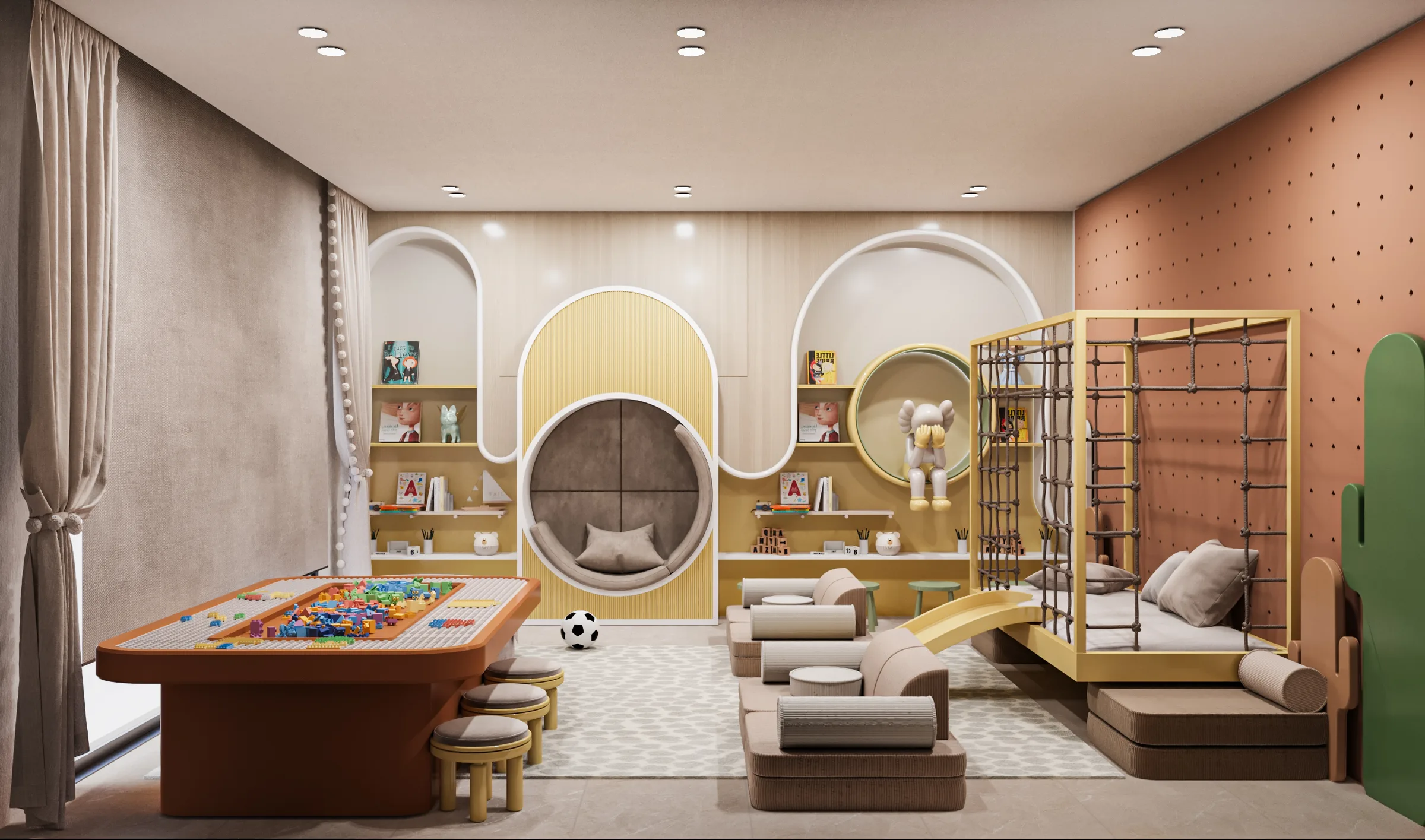
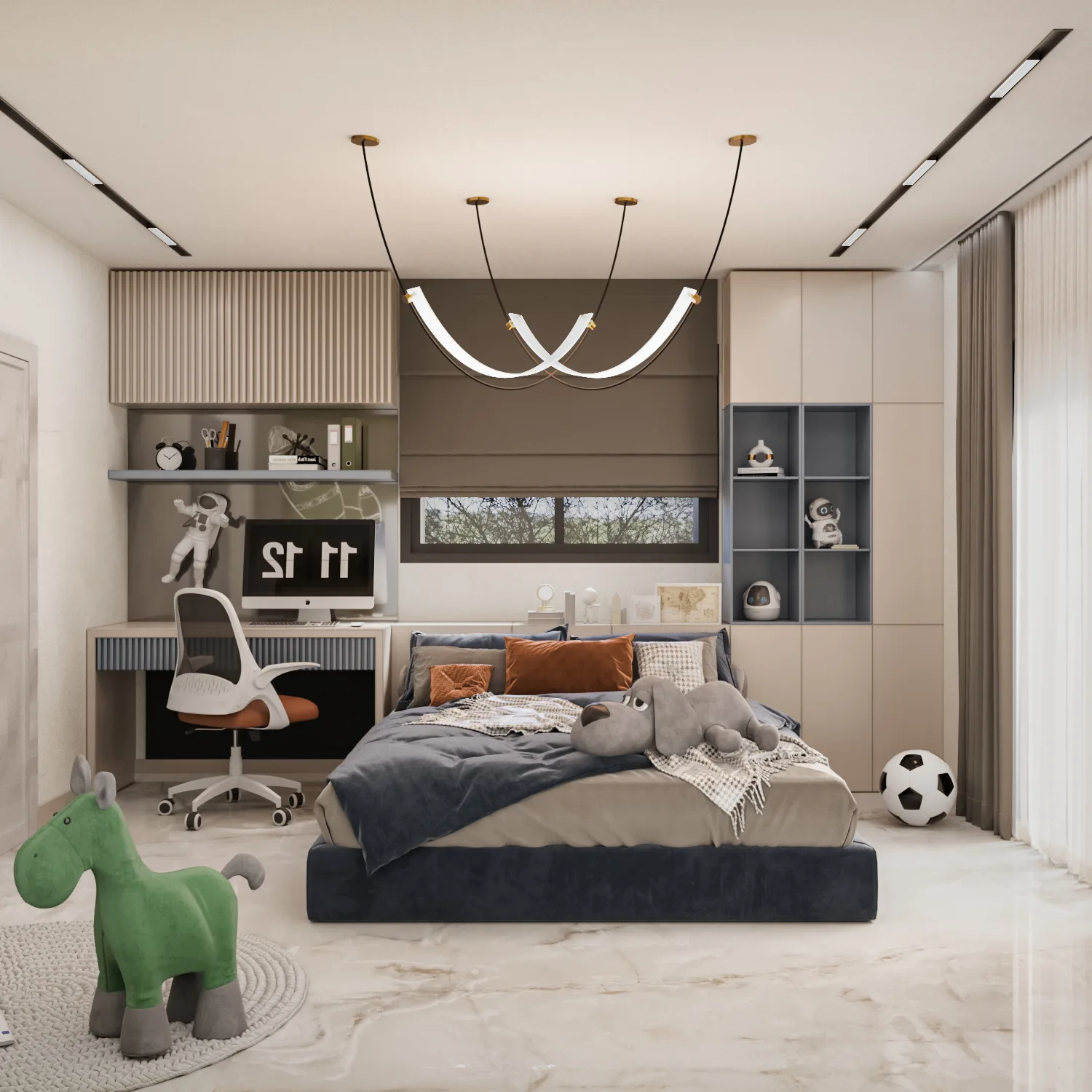
The images above are from our Fethiye Modern Villa project, where children's bedrooms and a separate playroom were designed together.
How we design children's rooms in the same language as the rest of the house is explained on our interior designer in Fethiye page.
Frequently asked questions
Until what age should a children's room be designed to work?
We suggest planning the fixed elements, meaning wardrobe, floor, lighting and sockets, to serve right through the teenage years. Bed, desk and decoration change with age.
Is made-to-measure furniture worth it in a child's room?
Yes for things that stay for years, such as wardrobes and wall storage. For beds and desks that change every few years, adjustable ready-made pieces are usually more flexible.
Can two children share a room?
If the room is large enough, yes. A bunk or raised bed saves space; giving each child their own wardrobe section, reading light and, ideally, desk makes sharing easier.
If you are planning a children's room or the whole house, get in touch; we will see the room on site and work through the options with 3D visuals.
- çocuk odası
- genç odası
- çocuk odası tasarımı
- iç mimari
- Fethiye